


By Elvis Eromosele

Ikeja. A roadside stall. The evening air thick with the aroma of sizzling suya, steaming amala, and pepper soup. I sat there, one of those occasional roadside meals that still feel like a small act of normalcy in a country where the cost of living has rewritten daily life. Then a well-dressed woman approached the seller. She explained that she was expecting a transfer that had not yet landed. She would pay as soon as it came in.
For a moment I thought the seller would refuse. Instead, without blinking, she sold and packed the food for the woman to take away. I was aghast. “Do you know her?” I asked. “She comes here on occasion,” the seller replied simply.
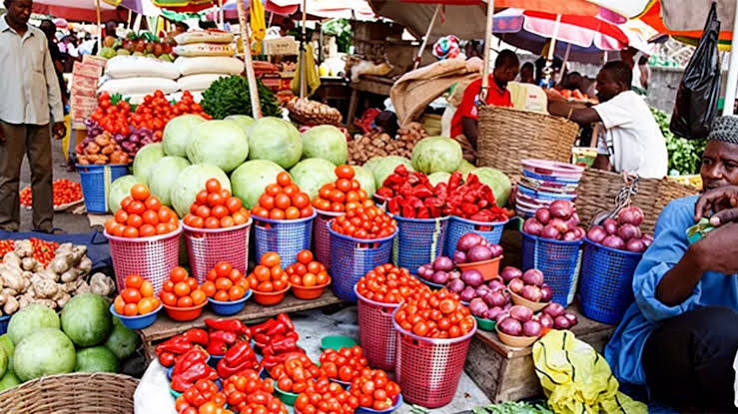
That small act of trust, repeated across countless street corners, markets, and junctions in Lagos and beyond, captures something profound about this moment in Nigeria. Grocery stores and formal food sellers have become lifelines for many families. But the real MVPs of this season are the street food sellers. These are the women and men who stretch ingredients, keep prices affordable, and extend credit quietly when the bank alert refuses to come.
Today, food inflation remains stubbornly high. The National Bureau of Statistics reveal that food inflation stood at 20.31 per cent year-on-year in July 2026, up from 17.52 per cent in June. This is the highest reading in about ten months. Month-on-month, it accelerated to 5.56 per cent. Headline inflation eased slightly to 15.43 per cent, but the divergence is telling: overall prices are moderating while the cost of the food that dominates household budgets continues to climb. Rice, tomatoes, garri, plantain, beef, eggs, onions, pepper and other staples drove the latest rise.
This crisis is not new. The difference now is that multiple forces have converged. Think rising insecurity in key farming regions; climate shocks (floods/drought) and the perennial massive post-harvest losses. To these, add high fuel costs which feed directly into transport and logistics; imported inputs (fertiliser, seeds, machinery, agro-chemicals) which are priced in foreign currency; and structural low productivity, rain-fed farming with limited mechanisation. Together, it becomes obvious why supply struggles to keep pace with demand and population growth.
The government has not been idle. The Tinubu administration granted temporary import duty and levy waivers on selected staples and inputs to ease immediate supply gaps. Thousands of tractors and equipment have been rolled out under the Renewed Hope Agricultural Mechanisation Programme. Farm input support schemes, subsidised seeds and fertiliser, and efforts to recapitalise the Bank of Agriculture aim to reach smallholders.
Yet the recent uptick shows the limits of current interventions. Breaking the cycle of food inflation requires a coordinated approach that treats food inflation as both a supply and a structural problem. Monetary policy alone cannot grow more tomatoes or secure a farm in Zamfara. The government must consider other options.
One, make farming safe again. This means prioritising security in major food-producing local government areas through community-based intelligence, better coordination between security agencies and local leadership, and targeted protection of farming communities and transport corridors. Without this, other investments leak away.
Two, scale climate-smart and year-round production. Expand solar-powered and other decentralised irrigation to reduce dependence on rainfall. Promote drought- and flood-tolerant seed varieties, soil health practices and weather-indexed insurance. Indeed, it is time to move dry-season farming from pilot to national programme.
In addition, everything possible must be done to slash post-harvest losses. Begin by investing aggressively in rural storage (including airtight silos and community warehouses), processing facilities near production zones, and rural road rehabilitation. Every tonne saved is a tonne that does not need to be imported or priced higher due to scarcity.
Moreover, efforts must be expended to strengthen value chains and reduce intermediary costs. Among other
things, improve market information systems, reduce multiple taxation and unofficial levies on food transport, and support agro-processing so more value is retained domestically. Plus, there has to be backward integration incentives for food manufacturers to create reliable demand for farmers.
Furthermore, targeted social protection is indispensable. So, while structural reforms take root, the government must maintain well-targeted cash transfers, food banks or school feeding that protect the most vulnerable without creating permanent dependency. Since street food sellers themselves form an informal safety net, policies that enable rather than harass them (hygiene support, access to finance, secure trading spaces) multiply impact. KAI, take note!
These steps are not new ideas. Many appear in existing government plans and expert recommendations. The difference between plans and results lies in execution, sequencing, security, and sustained political will across election cycles.
The woman in Ikeja who received her meal on trust is not an isolated case. Across Nigeria, street food sellers absorb delayed payments, adjust portions, and keep feeding families when formal systems strain. They are the visible face of resilience. But resilience has limits. Nigerians should not have to rely indefinitely on the goodwill of roadside vendors to eat.
Eromosele, a corporate communications expert and sustainability advocate, writes via elviseroms@gmail.com

