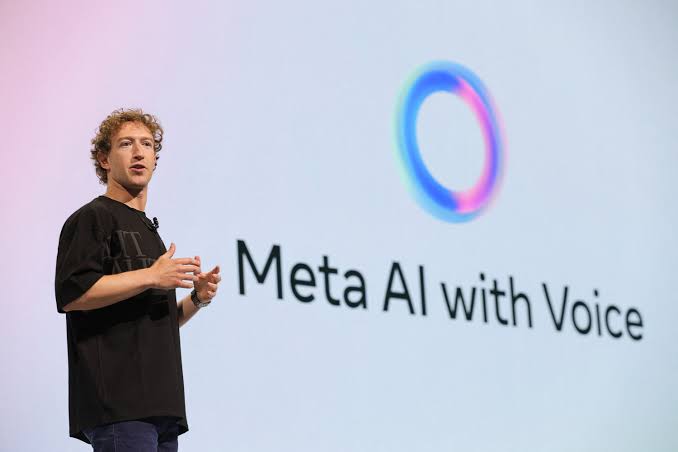
Meta CEO Mark Zuckerberg has conceded that the company’s ambitious AI agent technology is advancing more slowly than anticipated, as the social media giant grapples with the fallout from a major internal restructuring.

Speaking at an internal town hall on Thursday, Zuckerberg acknowledged shortcomings in the company’s sweeping changes, according to a recording heard by Reuters. He said AI agents, automated systems designed to perform tasks on behalf of users, “haven’t really accelerated in the way that we expected” over the past four months.
Zuckerberg also admitted the reorganisation, which included significant job cuts, “was not as clean” as it could have been and that executives misjudged the timing of the overhaul.
In May, Meta laid off approximately 10 per cent of its global workforce (around 8,000 jobs) and reassigned roughly 7,000 employees to AI-focused teams. The moves were intended to free up resources for massive AI infrastructure investments and boost efficiency through AI-assisted work.
The changes sparked employee pushback and concerns about morale. Zuckerberg had assured staff in May that he did not expect further company-wide layoffs this year.
In retrospect, Zuckerberg said the company’s bets on the new structure “haven’t come to fruition yet.” He noted that earlier this year, executives were “super optimistic” about rapid AI progress, including tools like Anthropic’s Claude Code.
Meta is projected to spend up to $145 billion on AI infrastructure in 2026, part of a broader Big Tech AI spending spree exceeding $700 billion.
Despite the slower-than-expected progress on agents, Zuckerberg told employees he expects “more significant benefits” from Meta’s AI investments to materialise within the next three to six months.
In the same town hall, Andrew Bosworth, Meta’s Chief Technology Officer, addressed a recent data security incident involving the company’s controversial mouse-tracking software. He said a review found that no employee data from the program was included in AI training.
The comments come amid broader internal tensions at Meta, including reports of low morale, heavy workloads, and criticism of an AI training initiative that tracked employee activity.
A Meta spokesperson declined to comment on the town hall remarks.