


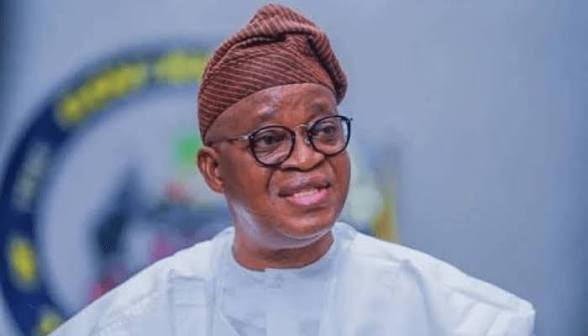
By Babafemi Ojudu

I have read, watched and listened to several diatribes against Gboyega Oyetola following the recent political developments in Osun State. Interestingly, many of the harshest attacks have come not from members of the opposition—Accord or the ADC—but from within his own party, my party.
I know Gboyega Oyetola very well. I have studied him both from a distance and at close quarters. Whatever anyone may say about his politics or the consequences of his decisions, I do not believe that Oyetola is a bad man. He is not bad at all. I am prepared to stake my credibility on that judgement. Some of my friends in Osun may wonder why Babafemi Ojudu is saying this at a time like this. I repeat: Oyetola is not a bad person.
His tragedy is that he was pushed into an environment for which neither his temperament nor his training adequately prepared him. Some of us are victims of this mismatch too. Even Chief Obafemi Awolowo was, to some extent, a victim of it.
Let me tell you a short story.
Awo was said to have been approached by Paul Unongo, then an up-and-coming and influential northerner, about supporting him to become President in 1979. Unongo visited Awo with some members of his group. Their discussion was progressing well until Unongo asked Awo how many cabinet positions he would give them in exchange for their support. Awo did not hesitate to throw them out of his house. Why? Because Awo neither played nor condoned that kind of politics.
Your guess is as good as mine as to what another politician, one not cast in the Awo mould, would have done. He would probably have made promises he had no intention of keeping, simply to attain power. Do not misunderstand me: I am not comparing Oyetola with Awo. I am merely explaining why a man like Awo, with all his talents, could not attain the presidency of Nigeria while lesser mortals have been able to do so.
Oyetola is not a natural politician. He is an insurer, a finance professional and a businessman—a man of figures, data, calculations, investments and measured risks. He understands where to invest ₦10 million and generate ₦15 million within six months.
The economics of business is different from the economics of politics. In business, profit can be measured on a balance sheet. In politics, the most valuable assets are often intangible: trust, loyalty, affection, perception, accessibility, compromise, deception, deceit, sleight of hand, outright lies and the ability to make people feel that they matter when in real sense they amount to nothing.
I expressed my reservations when Oyetola’s brother began pushing him into politics. Oyetola himself resisted for some time but eventually yielded to the pressure of those apparently determined to establish a political dynasty.
Yet, even within dynasties, wisdom demands a proper allocation of roles. Some family members, by training and temperament, are best suited to managing the family’s businesses, investments and fortunes. Others possess the instinct, stamina and emotional intelligence required for the rough-and-tumble of politics. Blood relationship does not automatically confer political ability. Nor does success in business necessarily translate into success in public leadership.
Oyetola is not naturally the smiling, hugging and backslapping type. He can sometimes appear detached and aloof from his immediate environment, seemingly oblivious to its changing moods and undercurrents. He does not enjoy the noise, drama and ceaseless human engagement that politics demands. He is not given to singing, dancing or theatrical displays of familiarity.
In this respect, he was the complete opposite of Rauf Aregbesola, whom he served as Chief of Staff for eight years. Aregbesola is gregarious, expressive and instinctively political. He loves people and demonstrates it openly. He understands the language of crowds, the symbolism of gestures and the importance of emotional connection. Whether one agrees with him or not, he possesses the temperament of a politician.
Oyetola, by contrast, was well suited to the position of Chief of Staff. A good chief of staff often works quietly behind the scenes. He coordinates, calculates, manages and advises without constantly seeking the limelight. Oyetola performed that role effectively for eight years. But the qualities that make an excellent chief of staff do not necessarily make an effective governor—particularly in a politically rambunctious state such as Osun.
The moment he was pushed into the governorship, after Aregbesola deferred to his political leader, Oyetola became something of a fish out of water. He had moved from an office in which discretion was an advantage to one in which visibility, accessibility, persuasion and constant political engagement were indispensable.
Because he was not naturally equipped for the role thrust upon him, he became increasingly vulnerable to sycophants and political opportunists. They supplied him with their own interpretations of reality: fight Aregbesola; defy your brother over Adeleke; distrust this person; punish that group; treat every disagreement as disloyalty. Minions sold him convenient falsehoods and manufactured enemies for him—all in pursuit of their selfish interests.
This is one of the dangers confronting a leader who lacks an independent political antenna. When a leader cannot personally read the mood of the people, he becomes dependent on interpreters. Those interpreters soon become gatekeepers. They filter information, exaggerate threats, conceal mistakes and turn their private enemies into the leader’s enemies. Eventually, the leader begins to govern an imaginary society created by courtiers, while the real society drifts farther away.
Now, the political bus has been driven into a ditch, and almost everyone has become a victim: some are politically dead, some have broken limbs and others are nursing deep wounds. Those who encouraged the driver to accelerate may soon disappear, leaving him to answer for the wreckage.
There are important lessons here for anyone contemplating politics or public office.
The first is that competence is not transferable without adaptation. A successful businessman, lawyer, journalist, soldier, academic or technocrat does not automatically become a successful political leader. Politics requires its own kind of intelligence: the capacity to listen, persuade, negotiate, build coalitions, overlook—or pretend not to notice—bad behaviour, manage conflicting interests and remain emotionally connected to the people.
Second, no one should accept public office merely to satisfy family ambition, elite pressure or dynastic expectations. Power may be offered by others, but its burdens will ultimately be borne by the person who occupies the office. Before accepting, one must ask honestly: Do I possess the temperament for this assignment? Am I prepared for its noise, criticism, compromises, betrayals and relentless human demands?
Third, a leader must never surrender his judgement to sycophants. Courtiers rarely tell a powerful man when the road ahead ends in a ditch. They applaud his speed, blame imaginary enemies and assure him that every warning is an act of sabotage. A wise leader must deliberately cultivate people who can disagree with him without fear.
Fourth, politics is ultimately about human beings, not merely figures, projects or administrative efficiency. Roads, bridges and budgets matter, but so do warmth, fairness, accessibility and the public perception of justice. People want competent government, but they also want to feel seen, heard and respected. It requires the best of Awolowo combined with the best of Nnamdi Azikwe.
Finally, leadership is not merely about occupying the highest office available. It is about finding the role in which one’s temperament, ability and experience can produce the greatest public good. There is no shame in being an outstanding adviser, administrator or technocrat. The tragedy begins when society mistakes proximity to power for fitness to wield it.
What we are witnessing in Osun is, therefore, more than the political misfortune of one man. It is a cautionary tale about the consequences of forcing a reluctant technocrat into the furnace of partisan politics without ensuring that he possesses—or develops—the temperament, instincts and independent judgement the office requires.

