
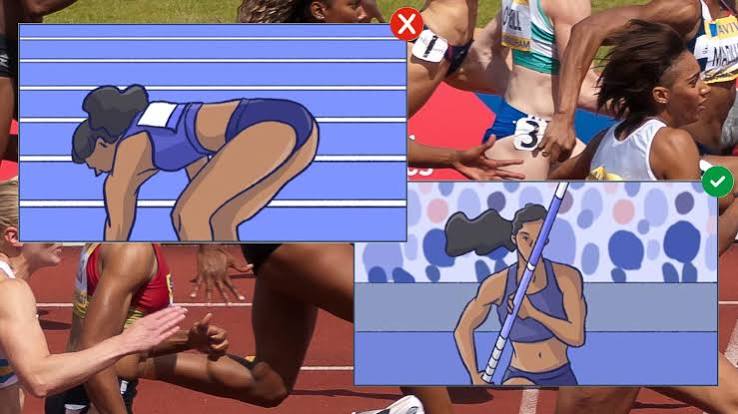
Broadcasters are being ordered to clean up their act.

New guidelines released by the European Broadcasting Union (EBU) aim to put an end to the sexualization of female athletes, urging TV crews to ditch intrusive, inappropriate camera angles during live sports coverage.
Developed in direct collaboration with female athletes, the new “do’s and don’ts” checklist targets voyeuristic broadcasting habits. The guidelines explicitly ban low-angle shots from underneath competitors in events like the high jump and pole vault, and call for an end to unnecessary, lingering close-ups and slow-motion replays that serve no technical or storytelling purpose.
British Olympic bronze medalist Holly Bradshaw, who helped advise the EBU, revealed that poor camera choices have made her a target for online abuse.
“I have first-hand received social media abuse and witnessed inappropriate videos online of myself and colleagues when slow-motion content of us competing is captured,” the pole vaulter said.
Bradshaw warned that the problem is so severe it actively disrupts competition. “Many athletes, myself included, have been in competitive scenarios where they are more focused on the cameras instead of their own performance. On too many occasions, cameras are zoomed in, showing super slow-motion action replays of athletes in undignified positions.”
Serbian Olympic long jumper Ivana Spanovic, who also advised on the draft, added that these intrusive angles do more than just cause discomfort on the field—they can have “serious long-term effects on athletes’ mental health.”
The EBU reaches a massive global audience of over one billion people across 57 countries. Its executive director, Glen Killane, acknowledged that the industry has a major problem.
“The sexualization of women athletes through selective camera angles and editing choices continues to be a significant concern across many sports broadcasts,” Killane said.
The new rules are expected to be implemented at the European Athletics Championships in Birmingham, starting August 10. However, because the Diamond League operates outside the EBU, it will not be legally bound by these new standards, highlighting that there is still a long way to go before sports broadcasting is completely cleaned up.