


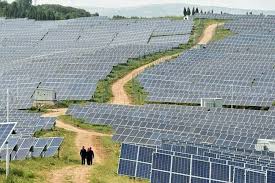
The Rural Electrification Agency (REA) will spend N100 billion in 2026 to install hybrid mini-grids across government agencies within and outside Abuja, as part of efforts to improve electricity reliability and reduce energy costs in the public sector.

Abba Aliyu, Managing Director of the agency, disclosed this while speaking to journalists on the sidelines of the 2026 budget defence session organised by the House Committee on Rural Electrification in Abuja, according to the News Agency of Nigeria (NAN).
Aliyu said the N100 billion allocation forms part of the agency’s broader N170 billion proposed budget for 2026. The funds will finance the National Public Sector Solarisation programme, which targets federal institutions across the country.
The hybrid mini-grid systems, he explained, combine solar power with complementary energy sources to guarantee uninterrupted electricity supply.
“The total budget size for 2026 operations is N170 billion, out of which N100 billion has been approved for National Public Sector Solarisation,” Aliyu said, noting that the intervention will cover agencies in the Federal Capital Territory and other states.
He cited the National Hospital in Abuja as an example of a facility where similar infrastructure has already improved power stability while cutting operational expenses.
Beyond the solarisation initiative, the 2026 proposal includes more than 500 electrification projects nationwide. These will cover:
- Grid extensions to nearby communities
- Deployment of transformers
- Mini-grids for agrarian and cottage-industry clusters
- Solar home systems for sparsely populated areas
The initiative is designed to ease pressure on the national grid while expanding electricity access in underserved regions.
Earlier in February 2026, REA signed a Memorandum of Understanding with the Economic Community of West African States (ECOWAS) to deploy solar power systems to 15 public institutions across Nigeria.
The project will be implemented under the Regional Off-Grid Electricity Access Project (ROGEAP), a World Bank-supported programme aimed at expanding off-grid electricity access across West Africa and the Sahel. ECOWAS is providing a $700,000 grant to install solar photovoltaic systems in selected rural health centres and schools in the Federal Capital Territory, Niger and Nasarawa States.
REA is serving as the technical and financial implementing agency for Nigeria’s pilot phase under ROGEAP.
In 2025, the agency deployed more than 200 mini-grids in underserved communities under the Nigeria Electrification Project (NEP). Aliyu also revealed that President Bola Tinubu approved the $750 million Distributed Access through Renewable Energy Scale-Up (DARES) project, which aims to deploy 1,350 mini-grids to provide electricity to about 17.5 million Nigerians.
Earlier in 2025, Aliyu outlined a three-year plan to expand electricity access to millions of Nigerians through a diversified approach:
- 30 million Nigerians via isolated mini-grids
- 1.5 million Nigerians through interconnected mini-grids
- 12 million Nigerians via mesh grids and standalone solar home systems
The agency also secured approval to establish a renewable asset management company to ensure the sustainability and long-term viability of its electrification infrastructure.
With the 2026 allocation, REA is positioning hybrid mini-grids as a cornerstone of Nigeria’s strategy to scale up renewable energy access and strengthen power supply across public institutions and rural communities.

