
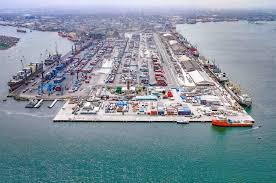
Nigeria has secured a £746 million financing agreement from the United Kingdom to upgrade its key seaports in Lagos, in a move aimed at boosting trade efficiency and strengthening the country’s maritime sector.

Adegboyega Oyetola, Minister of Marine and Blue Economy, disclosed that the deal will fund the modernisation of the Apapa and Tin Can Island ports, Nigeria’s busiest and most critical maritime gateways.
The agreement, backed by UK Export Finance (UKEF), is scheduled to be formally signed on March 18 and 19 at Windsor Castle, where President Bola Tinubu is expected to be hosted by King Charles III.
The Lagos Port Complex, established in 1913, remains Nigeria’s oldest and busiest seaport, handling a significant share of the country’s imports and exports. The Tin Can Island Port Complex, commissioned in 1977, was developed to complement Apapa’s capacity.
Together, the two ports account for over 70 per cent of Nigeria’s cargo throughput, serving as the backbone of the nation’s maritime trade.
Despite their importance, both facilities have suffered from decades of underinvestment and limited modernisation, resulting in congestion, inefficiencies, and the diversion of large vessels to better-equipped ports in other countries.
Oyetola described the project as more than a routine upgrade, noting that it represents a comprehensive transformation of Nigeria’s port infrastructure.
According to him, the modernisation will include digitalisation and automation of port processes, aimed at improving efficiency, transparency, and operational reliability.
“Modern infrastructure supported by digitalised and automated processes will significantly enhance efficiency, transparency, and operational reliability,” the minister said.
He added that the upgrade will lead to faster cargo clearance, reduced demurrage and logistics costs, and a more predictable system for moving goods in and out of the country.
The port overhaul is expected to play a critical role in improving Nigeria’s trade competitiveness and unlocking economic growth.
“Efficiency at the ports is central to the health of the national economy. These improvements will not only ease trade but will also stimulate economic growth and generate increased revenue for national development,” Oyetola added.
The project builds on earlier efforts by the government to modernise port infrastructure, including previous funding approvals and partnerships aimed at addressing long-standing bottlenecks in the maritime sector.
With the new financing in place, stakeholders say Nigeria is taking a significant step toward aligning its port operations with global best practices and reclaiming its position as a leading trade hub in West Africa.