


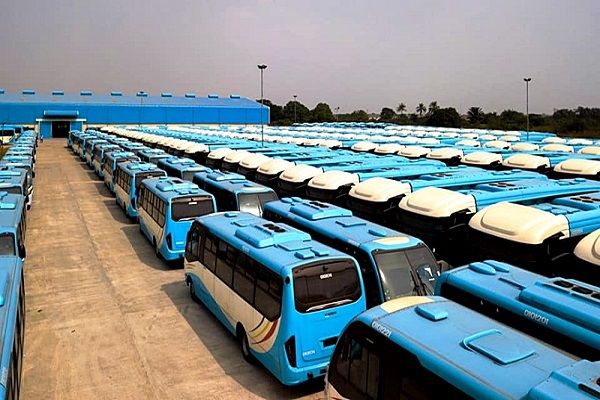
Lagos State will begin regulated bus operations on the Lekki–Epe corridor on December 8, deploying 229 high- and medium-capacity buses in the first phase of a major transit reform.

The Lagos Metropolitan Area Transport Authority (LAMATA) announced the rollout on Tuesday, noting that it marks the start of the Lekki–Epe Bus Reform Scheme, designed to introduce exclusive, government-regulated bus services across key routes.
Under the new system, buses will operate on routes including:
- Ajah-CMS/Marina
- Ajah-Obalende
- Ajah-Oshodi
- Ajah-Berger
- Ajah-Iyana Ipaja
One operator will run an express service, while others will offer regular, stage-by-stage operations. All buses will feature the standard blue-and-white Lagos regulated colours, QR-enabled PTCS verification stickers, unique identification codes, and Touch and Pay (TAP) stickers.
LAMATA said the reform aims to improve safety, comfort, and operational discipline along the corridor.
Cashless Payments and Enforcement
The state government emphasised that payments on all routes will be strictly cashless, using the Cowry card. Drivers, ground staff, or commuters caught making or accepting cash payments will be arrested and prosecuted.
Hon. Sola Giwa, Special Adviser to the Governor on Transportation, noted that Lagos is working with stakeholders to phase out ageing vehicles and gradually remove korope buses from major highways, shifting them to feeder and community routes. The initiative also supports the expansion of the First and Last Mile bus scheme.
Why the Reform Matters
Before this scheme, commuters along the Lekki–Epe corridor relied heavily on personal cars and unregulated commercial buses (korope or danfo), which typically carry 7-16 passengers and make multiple stops, resulting in longer and less predictable journeys.
Unlike other regulated routes in Lagos, such as TBS–Ikorodu/Ikeja/Egbeda and Marina–Ikorodu/Ikeja, the Lekki–Epe corridor had no formal bus system.
The introduction of 229 regulated buses is expected to:
- Reduce reliance on small, unregulated vehicles
- Improve safety and travel comfort
- Offer more reliable, efficient movement for thousands of daily commuters
- Bring better order and professionalism to the corridor’s transport operations
LAMATA also confirmed that this is only the first phase, with the reform ultimately extending to Epe.

