


Lagos State attracted $2.73 billion in capital inflows in the third quarter of 2025, accounting for 45 per cent of Nigeria’s total inflows during the period, Governor Babajide Sanwo-Olu has said.

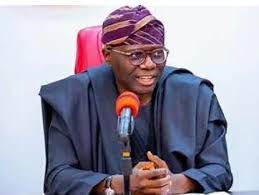
Sanwo-Olu disclosed this while speaking at the John F. Kennedy Jr. Forum on Africa’s Urban Future at the Harvard Kennedy School Institute of Politics in Boston, United States.
According to a statement from the Lagos State Government, the governor described Lagos as central to Africa’s urban transformation and economic growth.
Sanwo-Olu highlighted the state’s strong economic indicators, noting that internally generated revenue (IGR) reached $821.9 million (N1.26 trillion) in 2024, representing 35 per cent of Nigeria’s total IGR.
He also noted that Lagos accounts for about 10 per cent of Nigeria’s population, with 40 per cent of residents aged between 15 and 34, a demographic he said drives innovation and entrepreneurship.
The governor added that Lagos has become a major technology hub, hosting more than 2,000 startups and five fintech unicorns valued at over $1 billion each.
“With 26 tertiary institutions, Lagos is among the leading states in Nigeria for higher education and talent development,” he said.
Sanwo-Olu attributed the state’s economic growth to sustained infrastructure investments and a youthful population.
He highlighted projects under the government’s THEMES+ development agenda, which focuses on transportation, technology, tourism, security and social inclusion.
Key projects include the Blue and Red rail lines, designed to ease transportation challenges in Africa’s most populous city.
The governor said Lagos’ development reflects Africa’s broader urban and economic transformation.
“Africa’s urban future is already unfolding, and Lagos is right at the centre of it,” Sanwo-Olu said.
He noted that Lagos was recently ranked the world’s fastest-growing tech ecosystem in 2025 by the Global Tech Ecosystem Index, highlighting the city’s growing appeal to investors and startups.
For 2026, the Lagos State House of Assembly approved a ₦4.44 trillion “Budget of Shared Prosperity,” with ₦2.185 trillion allocated to capital projects to support infrastructure-led growth.

