


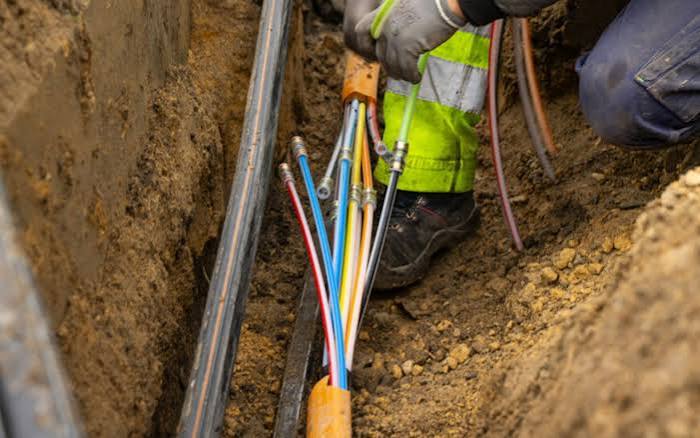
Nigeria’s ambition to build a thriving digital economy and achieve a $1 trillion economy is facing a serious threat as vandalism, road construction and accidental fibre optic cable damage continue to cripple telecommunications infrastructure across the country.

New data from the Nigerian Communications Commission (NCC) shows that 155,397 fibre-cut incidents were recorded between April and May 2026, the highest level of network disruption since the liberalisation of Nigeria’s telecommunications sector.
The figures, contained in the NCC’s Quality of Experience (QoE) report, represent a staggering 2,428 per cent increase compared with the first quarter of 2026, highlighting growing pressure on telecom operators struggling to keep networks running.
The surge comes despite the Federal Government’s designation of telecommunications infrastructure as Critical National Information Infrastructure (CNII), a status that provides legal protection and prescribes prison terms of up to 10 years for vandals who damage telecom assets.
Yet deliberate vandalism, poorly coordinated road construction, ageing infrastructure and environmental factors continue to undermine network reliability, threatening Nigeria’s digital transformation agenda.
According to the NCC report, fibre-cut incidents increased from 74,276 in April to 79,121 in May, representing a 6.5 per cent month-on-month rise.
The report identifies deliberate vandalism as the biggest cause of network disruptions, accounting for more than 54,000 fibre cuts during the two-month period.
Other major causes include:
- Infrastructure degradation and ageing equipment – about 40,000 incidents
- Hardware failures and technical faults – approximately 30,100 cases
- Road construction and civil works – about 14,600 fibre cuts
- Environmental factors and force majeure – 3,161 incidents
The data suggests that many of the disruptions could have been prevented through better infrastructure protection, improved coordination between telecom operators and construction companies, and stricter enforcement of existing laws.
Beyond fibre cuts, telecom operators are also grappling with widespread theft of critical infrastructure and increasing security challenges.
Across April and May, operators recorded 675 cases of equipment theft at base stations, including stolen batteries, generators and cables.
They also reported nearly 300 incidents of diesel theft, depriving off-grid telecom sites of the fuel needed to keep services running.
Adding to the challenges, engineers were denied access to base stations 4,319 times, preventing essential maintenance and emergency repairs.
According to the report, 74 per cent of these access restrictions were linked to worsening insecurity, while the remaining cases stemmed from disputes with host communities, resistance from local youth groups, disagreements with landlords and actions by local authorities.
Speaking on the challenge, Association of Licensed Telecommunications Operators of Nigeria (ALTON) Chairman Gbenga Adebayo said the existence of a market for stolen telecom equipment continues to fuel vandalism.

