


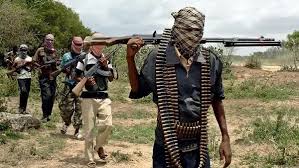
Nigeria’s security crisis is spreading across multiple regions as insurgents, criminal networks and politically linked armed groups continue to exploit gaps in state security, according to SBM Intelligence.

In its latest security assessment, the research and intelligence firm examined recent incidents involving Boko Haram and ISWAP in the North-East, Lakurawa in the North-West, armed groups in the South-East and criminal networks operating across the South-South and South-West.
SBM warned that although recent military operations have weakened some insurgent and criminal networks, the groups remain capable of regrouping, adapting their tactics and exploiting communities with limited security presence.
SBM said a common feature of the recent incidents is the ability of non-state armed groups to take advantage of weak local intelligence, difficult terrain and gaps in government presence.
The firm linked the VIP ambush in Abia State and a political abduction in Ebonyi State to the growing mobility of non-state armed groups operating across rural communities.
It said such groups are increasingly able to cross community boundaries while exploiting weaknesses in local intelligence systems.
SBM also said Boko Haram factions around the Sambisa Forest have resorted to opportunistic raids on communities on the forest’s fringes as military operations restrict their access to established supply routes.
The raids, it said, are aimed at obtaining food, medical supplies and cash.
On the reported escape of an inmate from Maiduguri Maximum Security Custodial Centre, SBM said the incident was more likely to have resulted from insider compromise or institutional laxity than from an externally coordinated prison break.
SBM also raised concerns over Lakurawa’s activities in Zamfara and Sokoto, warning that the group is exploiting communities already weakened by banditry.
According to the report, Lakurawa is seeking to establish influence, raise resources and compete for control in affected communities.
The assessment followed the reported neutralisation of 38 Lakurawa fighters in Gummi, Zamfara State.
While the operation could temporarily limit the group’s ability to launch attacks, SBM warned that surviving members could regroup and retaliate by targeting softer, less-protected communities.
The firm linked Lakurawa’s activities in Gummi and neighbouring communities to cattle rustling, looting and attempts to gain influence through religious preaching.
In Sokoto, the group was also linked to the killing of civilians in Tambuwal, with SBM saying cattle theft and attacks on commercial establishments have helped sustain its activities.
SBM expects security tensions to remain high in parts of Sokoto and Zamfara as military operations against the group intensify.
In the South-South, the security threat is becoming less associated with large-scale militancy and more with kidnapping, extortion and oil theft, according to the report.
SBM said these activities create a persistent but less visible security challenge across the region.
The firm argued that security forces must maintain pressure on insurgent and criminal groups while improving local intelligence and strengthening government presence in vulnerable communities.

