


The new facility strengthens community waste recovery efforts, building on an initiative that has recycled more than 1,000 tonnes of waste and supported over 2,000 livelihoods.

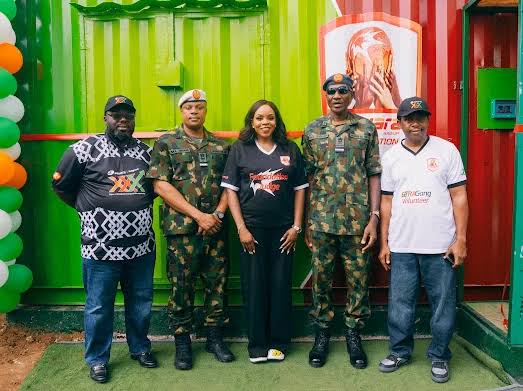
Sahara Group Foundation has commissioned its 23rd Sahara Go Recycling Hub at Sam Ethnan Air Force Base in Ikeja, Lagos, as it expands efforts to promote sustainable waste management, create economic opportunities and strengthen environmental responsibility in Nigerian communities.
The new facility is designed to turn recyclable waste into an economic resource by encouraging waste recovery and creating income opportunities for households and community-based enterprises.
The initiative forms part of the Foundation’s broader efforts to establish sustainable waste collection and recycling systems while promoting inclusive economic growth.
Speaking at the commissioning ceremony, Chidilim Menakaya, Director of Sahara Group Foundation, said the project reflects the organisation’s commitment to practical, community-driven solutions that deliver environmental and socio-economic benefits.
“This initiative aligns with our sustainability and development priorities by transforming waste into valuable resources, reducing environmental impact, supporting climate action and creating livelihood opportunities. It demonstrates how communities can advance environmental responsibility while promoting inclusive economic growth,” Menakaya said.
The commissioning brought together representatives of Sahara Group and its Foundation, officials of the Nigerian Air Force, Ikeja Electric, community leaders, volunteers and residents, highlighting the importance of partnerships in addressing waste management challenges.
Air Commodore M.A. Imam, Commander of 651 Base Services Group, commended the Foundation’s investment in environmental sustainability, stressing the importance of collective action in tackling waste management challenges in growing communities.
Kingsley Okotie, Head of Corporate Communications at Ikeja Electric, also welcomed the partnership, describing it as an opportunity to promote responsible environmental practices at the Air Force base.
He reaffirmed the electricity distribution company’s commitment to sustainable partnerships and supporting the well-being of customers, institutions, businesses and communities.
Menakaya said collaboration, innovation and community participation remained central to the Foundation’s approach to building cleaner and more resilient communities.
“Through collaboration, innovation and community participation, we are driving long-term environmental impact while improving livelihoods and strengthening community ownership of sustainable practices,” she added.
Since its inception, Sahara Go Recycling has facilitated the recycling of more than 1,000 tonnes of recyclable waste and directly and indirectly supported over 2,000 livelihoods.
These opportunities span waste collection, sorting, logistics and community-based enterprises, demonstrating how recycling can contribute to income generation alongside environmental protection.
The initiative seeks to change perceptions of waste by demonstrating that discarded materials can retain economic value when properly collected, sorted and channelled into recycling systems.
Beyond reducing waste sent to disposal sites, effective recycling programmes can help conserve resources, reduce pollution and support circular-economy activities in which materials are recovered and reused rather than discarded.
However, the long-term impact of such programmes depends on sustained community participation, reliable collection systems, access to recycling markets and the financial viability of waste recovery businesses.
The new hub at Sam Ethnan Air Force Base extends the Foundation’s network of recycling facilities and provides another platform for encouraging responsible waste disposal and recovery.
Sahara Group Foundation said it would continue expanding Sahara Go Recycling in line with its mission to build sustainable communities through EXTRApreneurship, an approach that links enterprise development with social impact.
The latest commissioning underscores the potential of partnerships between businesses, public institutions and local communities to address environmental challenges while creating economic opportunities.
As Nigeria grapples with growing volumes of plastic and other recyclable waste, initiatives that combine environmental awareness with practical collection infrastructure and livelihood support could contribute to more effective waste management.
The next challenge will be to sustain the new hub’s operations, deepen participation among residents and demonstrate measurable improvements in waste recovery and livelihoods over time.
For Sahara Group Foundation, the 23rd hub represents another step in its effort to make recycling a practical community activity that delivers both environmental benefits and economic value.

