


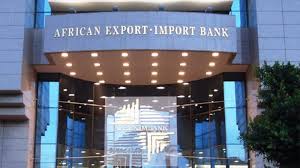
The African Export-Import Bank (Afreximbank) has urged the Federal Government to leverage ongoing bank recapitalisation to close Africa’s estimated $80–$120 billion annual trade finance gap.

Dr. Yemi Kale, Group Chief Economist and Managing Director of Research and Trade Intelligence at Afreximbank, made the recommendation at the Ecobank Customer Forum in Lagos. He highlighted that stronger bank balance sheets and deeper capital buffers are crucial to supporting exporters, SMEs, and domestic production under the African Continental Free Trade Area (AfCFTA) framework.
“Nigeria is a very large economy. Not only do we have a big domestic market, but we also have a potentially large market that can benefit the entire continent,” Kale said. He stressed that recapitalised banks would be better positioned to provide financing for businesses to grow, import machinery, and scale production, strengthening Nigeria’s role as a key engine for intra-African trade.
By expanding the intra-African capital base, banks can finance domestic industries, scale export-oriented production, and integrate SMEs into regional value chains, boosting competitiveness and contributing to the Federal Government’s $1 trillion economy ambition.
Kale noted that closing the trade finance gap also requires addressing infrastructure deficits, regulatory bottlenecks, and logistics constraints to reduce production costs, moderate inflation, and enhance purchasing power.
“If you fix the ease of doing business, goods become cheaper, inflation comes down, and purchasing power improves. Higher demand leads to higher production, more jobs, and more income,” he said.
He also criticized Nigeria’s continued export of raw materials and import of finished goods, attributing it to weak domestic competitiveness and production structure.
Bolaji Lawal, Managing Director of Ecobank Nigeria, said the forum aimed to explore practical strategies to accelerate exports and deepen regional integration. He highlighted Ecobank’s pan-African footprint in 33 countries as a strategic advantage for facilitating cross-border trade.
A CBN official, Tiku Allu of the Trade and Exchange Department, emphasised the need for stronger regional coordination and financial integration to unlock Africa’s trade potential, particularly through backward integration, where banks provide access to capital for domestic production rather than relying on imports.
The consensus from the forum is that bank recapitalisation, combined with policy reforms and infrastructure development, can significantly boost Nigeria’s capacity to finance trade, integrate SMEs into regional value chains, and support Africa’s broader economic growth ambitions.

