

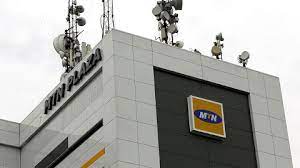
By Elvis Eromosele

Twenty-five years is a long time in any industry. In telecommunications, it is an entire lifetime of disruption, reinvention, regulatory tension, and relentless technological acceleration. In Nigeria, it is also a story of national transformation told through a yellow brand that became more than a network; it became infrastructure, culture, economy, and identity.
As MTN Nigeria marks its 25th anniversary, it is impossible to separate its corporate journey from Nigeria’s digital evolution. The company has not only witnessed the country’s shift from analogue isolation to digital integration; it has actively engineered much of it.
When MTN entered Nigeria in 2001 following the landmark GSM liberalisation by the Nigerian Communications Commission (NCC), mobile telephony was still a luxury reserved for the privileged few. Landlines were unreliable, and communication in general was an exercise in patience and privilege.
The NCC’s reform opened the door, but MTN walked through it with scale, ambition, and speed. In those early days, it did not merely compete; it created a market.
The now-iconic “Everywhere you go” slogan was more than branding; it was a promise of reach in a country where geography had long dictated exclusion. For millions of Nigerians, MTN became the first real bridge to modern communication.
From modest beginnings, the network has now grown to over 90 million active subscribers. It is today a dominant player in a market it helped build. In the quarter of a century of operations in Nigeria, MTN has evolved from a voice-centric operator into a digital infrastructure giant. Its investments in 3G, 4G LTE, fibre networks, and early 5G deployment have fundamentally reshaped consumption patterns.
Nigeria today is a data-first society. Social media drives commerce, streaming defines entertainment, fintech powers financial inclusion, and remote work is no longer an exception but an emerging norm. MTN sits quietly beneath this ecosystem as one of its most critical enablers.
Yet, its impact extends beyond connectivity. The company has catalysed entire value chains, SIM registration agents, tower contractors, retail distributors, fintech partners, and digital developers, forming a vast ecosystem that supports millions of livelihoods.
In many ways, MTN did not just connect Nigeria; it industrialised communication. The telecom giant’s contribution to Nigeria’s economy is both direct and multiplier-driven. Thousands are employed directly, but millions more are supported indirectly through its expansive ecosystem.
Billions of dollars in infrastructure investment have gone into base stations, fibre rollout, data centres, and rural expansion projects. This has helped to shrink Nigeria’s digital divide, though gaps remain in rural broadband access.
The MTN Nigeria Foundation, funded through a portion of profits, has also become a significant force for social impact, supporting healthcare upgrades, scholarships, digital skills training, and women empowerment programmes across the country.
It is estimated that tens of millions of Nigerians have benefited directly or indirectly from its interventions. This social footprint reinforces MTN’s position not just as a commercial entity but as a development partner.
No honest assessment of MTN Nigeria’s journey can ignore its controversies and operational challenges. The most defining moment remains the 2015 SIM registration crisis, when the NCC imposed a record-breaking fine over compliance failures. The episode exposed the tension between regulatory enforcement and operational realities in a complex, fast-growing market.
Beyond regulatory issues, consumer frustrations persist. Nigerians continue to experience dropped calls, inconsistent data performance, congestion in urban areas, and perceived rapid data depletion. Despite massive infrastructure investments, the gap between expectation and experience remains a recurring issue.
There are also structural challenges: multiple taxation, vandalism of fibre infrastructure, high diesel costs due to unstable power supply, and foreign exchange volatility, all of which strain operations.
The next phase of MTN’s journey will not be defined by traditional telecom competition alone. The battlefield is expanding.
Fintech companies, over-the-top (OTT) platforms, satellite internet providers, and digital-native startups are redefining connectivity and value creation. MTN is increasingly operating in a space where it is no longer just a telecom operator but a digital platform company.
Beyond the balance sheets and base stations lies a more personal reflection. Many professionals who have passed through MTN Nigeria carry with them a deep understanding of its role in shaping modern corporate Nigeria. This writer spent nearly a decade within the ecosystem, witnessing firsthand how the company’s internal discipline, innovation culture, and market aggression helped define the standards of the Nigerian telecom industry.
MTN Nigeria’s story is ultimately a paradox. It democratised communication but still struggles with perception gaps in service quality. It built digital highways but still battles congestion on those roads. It enabled Nigeria’s digital economy but now faces rising expectations from a more demanding, digitally savvy population.
Yet, this paradox is also its strength. It reflects a company that operates at scale in one of the most complex markets in the world.
As MTN Nigeria turns 25, it stands at a crossroads of maturity and reinvention. The easy gains of market expansion are behind it. The next phase will be defined by intelligence, trust, efficiency, and inclusion.
Nigeria’s digital future will demand more than connectivity. It will demand reliability, affordability, security, and fairness. MTN will remain central to that journey, but under sharper scrutiny and higher expectations.
In truth, MTN Nigeria’s story is also Nigeria’s story: ambitious, uneven, resilient, and still unfolding.
Elvis Eromosele, a corporate communications professional and sustainability advocate, wrote via elviseroms@gmail.com
