


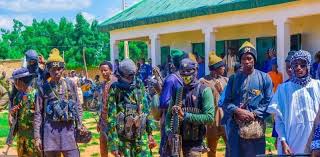
Nigeria cannot afford to treat Mali’s latest crisis as a distant problem. The coordinated attacks in Mali, reaching as far as Bamako, offer a stark warning of how quickly insurgencies can evolve when pressure eases, coordination improves among armed groups, and state response lags. For Nigeria, the message is clear: act decisively now or risk a more complex, multi-front security emergency.

At the heart of the lesson is escalation. What began in Mali as localised unrest grew into a hybrid threat involving jihadist factions, separatist elements, and external fighters. Nigeria is already confronting a similar mix through Boko Haram and Islamic State West Africa Province. While military operations have degraded these groups, they have not been decisively defeated. The danger lies in complacency: insurgencies rarely disappear, they adapt, regroup, and expand into ungoverned spaces.
Another critical takeaway is geography. Mali’s instability spread from the north to the capital. Nigeria’s own conflict, concentrated in the North-East, has shown signs of diffusion into the North-West and North-Central, with banditry, terrorism, and communal violence increasingly intersecting. If left unchecked, these could converge into a broader national security crisis.
Governance gaps also play a decisive role. Mali’s prolonged political instability, including military rule under Assimi Goïta, weakened institutional capacity and delayed reforms. Nigeria, under Bola Ahmed Tinubu, still has the advantage of functioning democratic institutions, but that advantage must be used. Delayed justice, weak local governance, and poor service delivery in conflict-prone areas continue to create fertile ground for recruitment by armed groups.
Equally important is the regional dimension. The Sahel is increasingly interconnected. Fighters, arms, and ideology move across porous borders linking Mali, Niger, Burkina Faso, and Nigeria. Without stronger regional coordination, through platforms like Economic Community of West African States (ECOWAS), Nigeria risks facing a spillover effect that could overwhelm national efforts.
The situation in Mali is not an isolated crisis, it is a preview of what can happen when insurgency is allowed to mature. Nigeria still has a window to act decisively. Closing that window through delay or denial would be a costly mistake.
So what must Nigeria do differently, and urgently?
First, shift from reactive to preventive security. Intelligence gathering, surveillance, and early-warning systems must be strengthened at community levels. Military success alone is not enough; it must be paired with local trust and actionable intelligence.
Second, reclaim ungoverned spaces. Insurgents thrive where the state is absent. Expanding infrastructure, education, and economic opportunities in vulnerable regions is not just development, it is security strategy.
Third, unify command and coordination. Fragmentation among security agencies weakens response effectiveness. A more integrated, intelligence-driven approach is essential to preempt coordinated attacks like those seen in Mali.
Fourth, cut off financing and logistics. Insurgent groups rely on local and cross-border supply chains. Disrupting these networks, through financial tracking, border control, and community engagement, can significantly degrade their capacity.
Finally, invest in deradicalisation and reintegration. Military victories must be sustained by social solutions that prevent recycled violence. Without this, today’s surrendered fighters may become tomorrow’s recruits.
The situation in Mali is not an isolated crisis, it is a preview of what can happen when insurgency is allowed to mature. Nigeria still has a window to act decisively. Closing that window through delay or denial would be a costly mistake.

