


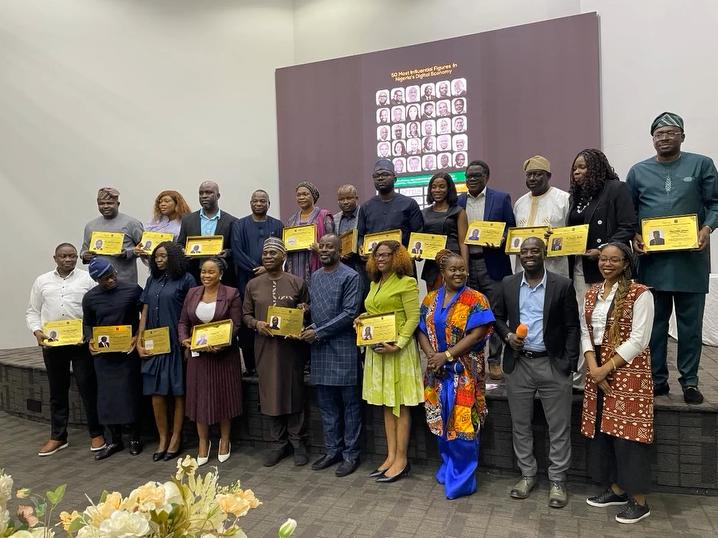
Building trust through data protection, positioning Nigeria as a producer, not merely a consumer, of artificial intelligence, and aligning politics with technology-driven economic reforms emerged as the defining themes of the West Africa Convergence Conference 2026, where industry leaders called for bold action to secure Nigeria’s place in the global digital economy.

The conference brought together policymakers, technology experts, regulators and business leaders to examine how West Africa can leverage digital innovation to accelerate economic growth, attract investment and build resilient digital ecosystems.
Dr. Vincent Olatunji, Director-General of the Nigeria Data Protection Commission (NDPC), said trust remains the single most important ingredient for a successful digital economy, warning that even the best government policies would fail if citizens and investors lacked confidence in the systems that support them.
“No matter how robust your policies are, if those who want to interact with your country or invest in your economy do not trust your systems, those policies will not achieve their objectives,” he said.
Olatunji explained that every online interaction leaves behind a digital footprint, making it imperative for governments and organisations to protect personal information from misuse, cyber threats and unauthorised access.
According to him, data protection is no longer simply about privacy but about national security, economic competitiveness and investor confidence.
He noted that Nigeria’s data protection journey began with the Nigeria Data Protection Regulation before the enactment of the Nigeria Data Protection Act in June 2023, which established the NDPC as an independent regulator.
The Commission, he said, has since intensified awareness campaigns, capacity building and compliance efforts across both the public and private sectors.
“When we started implementation, awareness of data protection was only about four per cent. Today, we have significantly expanded public awareness while strengthening compliance among organisations that process personal data,” he said.
Olatunji disclosed that the Commission has facilitated the creation of more than 27,000 jobs within Nigeria’s growing data protection ecosystem since the Act came into force.
He added that Nigeria has more than 500,000 organisations classified as data controllers and processors, creating significant demand for certified Data Protection Officers and presenting opportunities for employment, skills development and economic growth.
Dr Kashifu Inuwa Abdullahi, Director-General of the National Information Technology Development Agency (NITDA) said the central question confronting Nigeria is no longer whether the country will participate in the digital economy, but how it intends to shape and define it.
He described digital convergence as both an opportunity and an obligation, urging stakeholders to approach technological transformation as a design challenge requiring deliberate planning and collaboration.
“Nigeria is no longer just a consumer of artificial intelligence; it is increasingly becoming a producer,” he said.
He stressed the importance of developing indigenous AI capabilities, promoting responsible AI policies and strengthening cybersecurity readiness and resilience to support digital transformation.
The NITDA boss also highlighted the agency’s commitment to what it described as “developmental regulation”, a regulatory approach designed to stimulate innovation while creating an enabling environment for businesses to thrive.
According to him, digital technology remains “the great equaliser,” capable of expanding economic opportunities, improving public service delivery and driving inclusive national development.
Delivering another keynote, Dr. Armstrong Ume Takang, Managing Director and Chief Executive Officer of the Ministry of Finance Incorporated (MOFI), argued that merely being connected to the internet does not guarantee economic prosperity.
“Being present online is not sufficient to derive value from the digital economy. The real value comes from the extent to which we connect people, facilitate trade and enable businesses,” he said.
Takang maintained that politics remains the most powerful driver of economic transformation, asserting that public policy decisions made by political leaders ultimately determine national economic outcomes.
“Politics determines the economy,” he declared, pointing to President Bola Ahmed Tinubu’s announcement on fuel subsidy removal during his inauguration as an example of how political decisions can immediately reshape an economy.
He challenged technocrats to engage more closely with political leadership, noting that even the best technical recommendations cannot succeed without political commitment.
Reflecting on Lagos State’s digital transformation under Tinubu’s administration as governor, Takang credited the President with laying the foundation for today’s digital governance by investing in Oracle-based digital systems that significantly improved revenue generation despite initial public skepticism.
He also highlighted the transformation of MOFI from a passive holder of government investments into an active asset management institution focused on governance, transparency, accountability and value creation.
According to him, MOFI’s renewed mandate includes creating a comprehensive National Asset Register, improving governance of government-owned enterprises, leveraging public assets to mobilise capital for infrastructure projects, and establishing strategic investment platforms capable of generating long-term national value.
Speakers at the conference agreed that strengthening trust, investing in digital infrastructure, developing local digital talent, implementing forward-looking regulations and promoting collaboration between government and industry will be critical to ensuring Nigeria and the wider West African region remain competitive in the rapidly evolving global digital economy.

