


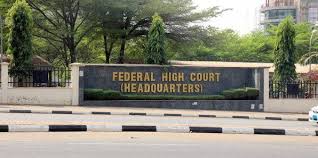
Justice John Terhemba Tsoho, Chief Judge of the Federal High Court, says the court disposed of 16,019 cases during the 2024/2025 legal year, out of a total of 181,924 matters handled nationwide.

As a result, 165,905 cases remain pending across the court’s divisions, he disclosed on Monday at the opening of the 2025/2026 Special Legal Year session.
Justice Tsoho explained that 161,999 cases were carried over from the 2023/2024 legal year, with an additional 19,925 new cases filed during the review period, bringing the total caseload to 181,924.
Of the cases disposed of, 3,113 were civil matters, 5,818 criminal cases, 3,724 motions, and 3,364 fundamental human rights applications.
He noted that at the close of the legal year, pending cases comprised 44,650 civil cases, 44,078 criminal cases, 46,228 motions, and 30,949 fundamental rights enforcement suits.
The Chief Judge said the figures reflect a commendable performance by the judiciary despite its broad jurisdiction and heavy workload. He added that the court’s impact is evident in areas such as Nigeria’s improved rating by the Financial Action Task Force (FATF), partly attributed to judicial contributions.
Justice Tsoho also announced the commencement of the court’s e-filing system in the Lagos Division, with plans to roll it out nationwide. He further disclosed that the appointment of 14 additional judges is at an advanced stage, following approval by the Chief Justice of Nigeria and the National Judicial Council.
Speaking at the event, the Chief Justice of Nigeria, Justice Kudirat M.O. Kekere-Ekun, cautioned that public confidence in the judiciary remains fragile, warning that opaque or inefficient court processes could undermine even sound judicial decisions.
She stressed that judicial independence must be upheld in practice, not just in principle, and commended judges who continue to discharge their duties with professionalism amid a growing and increasingly complex caseload.
The Federal High Court has wide jurisdiction, covering finance, revenue, civil service, and fundamental rights matters, which it shares concurrently with the High Court of the FCT and State High Courts.

