


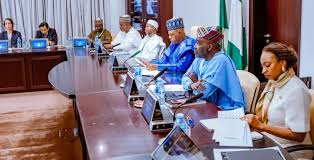
President Bola Tinubu on Thursday launched Nigeria’s National Halal Economy Strategy, a policy aimed at positioning the country to tap into the $7.7 trillion global halal market and fast-track economic diversification.

The strategy was unveiled at the Presidential Villa in Abuja by Vice President Kashim Shettima, who represented the President, according to a statement from the Presidency.
Government projections show the initiative could add about $1.5 billion to Nigeria’s GDP by 2027, driven by increased exports, job creation, and stronger participation in global halal value chains.
Speaking at the event, Shettima said the launch signals Nigeria’s readiness to compete in the rapidly expanding halal economy, already embraced by several leading economies worldwide.
He explained that the strategy provides a clear roadmap for Nigeria’s entry into key halal sectors, including food and beverages, pharmaceuticals, cosmetics, logistics, tourism, and finance, while aligning local capacity with global halal standards.
“The National Halal Economy Strategy is our commitment to meet global standards with Nigerian capacity and convert opportunity into lasting economic value,” Shettima said.
He stressed that success would depend on disciplined, inclusive, and measurable implementation, particularly in delivering jobs and expanding non-oil exports across the country.
Shettima also disclosed that implementation of the strategy will be chaired by Dr Jumoke Oduwole, Minister of Industry, Trade and Investment.
Earlier in January, Tinubu reinforced Nigeria’s halal ambitions during a visit to Türkiye, where both countries signed an agreement on Halal Quality Infrastructure to strengthen standards, certification, accreditation, and quality assurance, key steps toward boosting global acceptance of Nigerian halal products.
First announced in 2024, the National Halal Economy Strategy is part of the government’s broader push to diversify the economy, grow foreign exchange earnings, and build sustainable, export-driven growth.
The halal economy, covering goods and services permissible under Islamic law, is valued at over $7 trillion globally and extends beyond food to pharmaceuticals, cosmetics, modest fashion, tourism, and Islamic finance, with major hubs in Malaysia, Brazil, and Australia.

