


By Elvis Eromosele

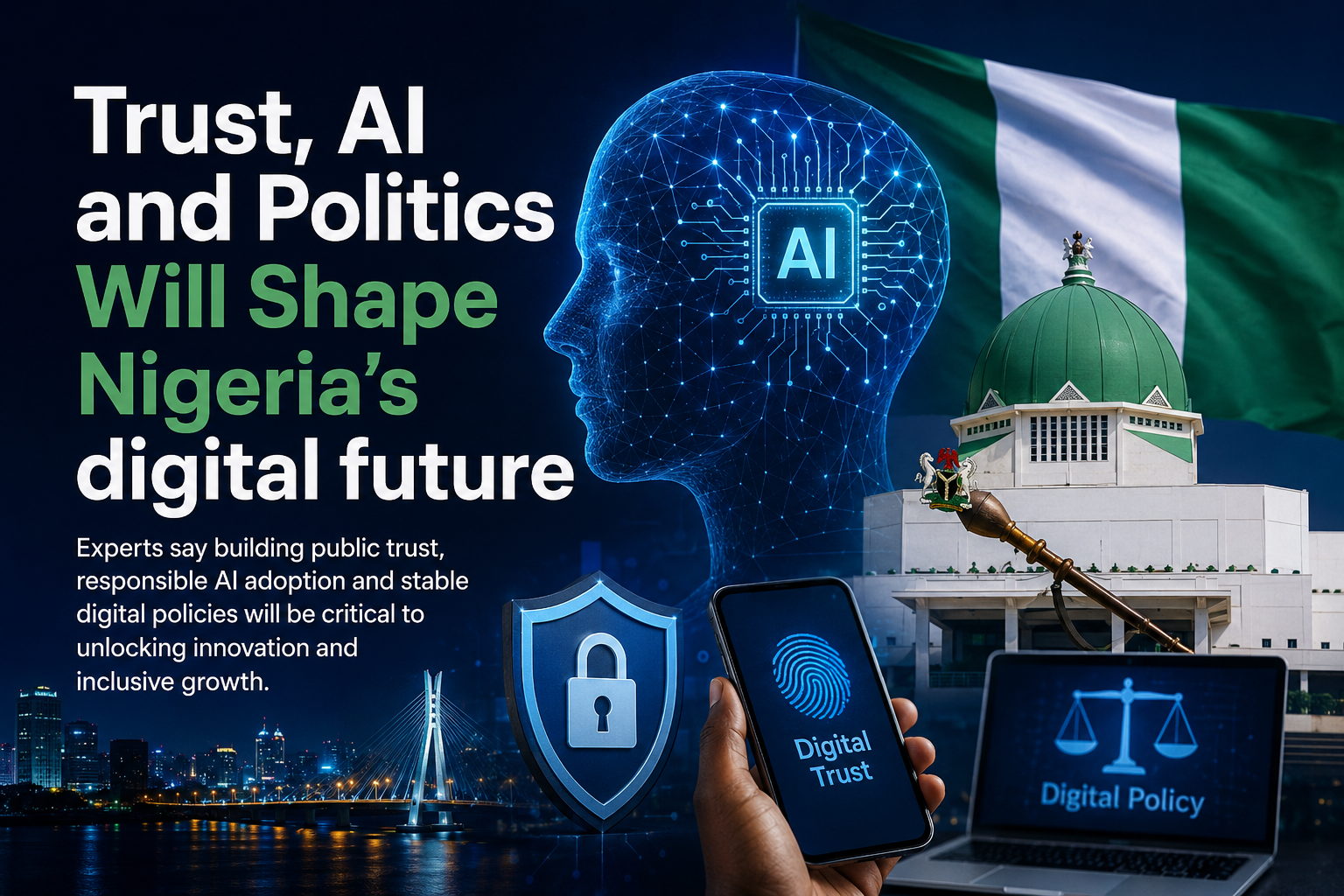
Nigeria stands at a defining moment in its digital transformation journey. The country boasts one of Africa’s largest technology ecosystems, a youthful population, vibrant fintech companies, growing artificial intelligence (AI) capabilities and an expanding digital economy. Yet, as the nation races towards a technology-driven future, experts say success will depend not merely on innovation but on three interconnected pillars, trust, visionary leadership and strategic public policy.
These themes dominated discussions at the West Africa Convergence Conference 2026, where policymakers, regulators, technology leaders and business executives examined how Nigeria can position itself as a leading digital economy in Africa.
One message resonated throughout the conference: digital transformation is not simply about deploying technology. It is about creating systems that people trust, policies that encourage innovation and institutions capable of sustaining economic growth.
Perhaps the strongest argument came from Dr. Vincent Olatunji, National Commissioner and Chief Executive Officer of the Nigeria Data Protection Commission (NDPC), who described trust as the currency of the digital economy.
His point was straightforward. Governments may design excellent digital policies and businesses may build sophisticated platforms, but if citizens and investors do not trust those systems, adoption will remain limited.
Every online transaction, from opening a bank account and shopping online to applying for government services, requires individuals to surrender personal information. Every click leaves a digital footprint.
Without adequate safeguards, that information becomes vulnerable to cybercriminals, identity theft, financial fraud and reputational damage.
Globally, cybercrime continues to impose enormous economic costs. According to estimates by Cybersecurity Ventures, cybercrime is projected to cost the world US$10.5 trillion annually, underscoring why governments are strengthening cybersecurity and data protection frameworks.
Recognising this reality, Nigeria has moved from the Nigeria Data Protection Regulation (NDPR) to the landmark Nigeria Data Protection Act, signed into law in June 2023. The legislation established the NDPC as an independent regulator with responsibility for safeguarding personal information and promoting responsible data governance.
The Commission’s achievements are already becoming visible.
According to Olatunji, awareness of data protection among Nigerians was barely four per cent when implementation began. Today, nationwide sensitisation campaigns, compliance programmes and capacity-building initiatives have significantly improved public understanding.
More importantly, the reforms are creating jobs.
The Commission says more than 27,000 jobs have already emerged within Nigeria’s growing data protection ecosystem since the law came into effect. Yet the opportunity is far greater. Nigeria has over 500,000 organisations classified as data controllers and processors, each expected to appoint qualified Data Protection Officers under the law.
This presents an entirely new professional ecosystem capable of generating thousands of high-value digital jobs for Nigerian youths.
Trust, however, extends beyond privacy.
Olatunji noted that foreign investors increasingly evaluate a country’s data protection framework before committing capital. Strong data governance has become an important indicator of regulatory maturity, institutional stability and business readiness.
In an era where data has become the world’s most valuable resource, protecting information is now as important as protecting physical infrastructure.
The conference also explored another important question: Will Nigeria merely consume digital technologies developed elsewhere, or will it become a creator of the next generation of innovation?
Dr Kashifu Inuwa Abdullahi, Director-General, National Information Technology Development Agency (NITDA) argued that this is the defining challenge of the decade.
According to him, the conversation is no longer whether Nigeria will participate in the digital economy but how the country intends to shape it.
He described digital convergence as both an opportunity and a responsibility, calling on government, academia and industry to embrace it as a deliberate design challenge rather than an accidental outcome.
One encouraging development is Nigeria’s growing participation in artificial intelligence.
Rather than remaining only a market for imported AI solutions, Nigeria is steadily building local expertise in AI research, software development and enterprise applications. The country’s expanding startup ecosystem is increasingly deploying AI across agriculture, healthcare, financial services, education and public administration.
The NITDA chief emphasised that responsible AI development must go hand in hand with cybersecurity readiness, resilient digital infrastructure and forward-looking regulation.
His description of digital technology as “the great equaliser” captures its transformative potential. Properly deployed, digital tools can improve governance, expand financial inclusion, create jobs and enable millions of young Nigerians to participate in the global knowledge economy.
Yet technology alone cannot transform a nation.
Perhaps the conference’s most thought-provoking intervention came from Dr. Armstrong Ume Takang, Managing Director and Chief Executive Officer of the Ministry of Finance Incorporated (MOFI), who argued that politics, not technology, is ultimately the force that shapes economic outcomes.
Drawing from his experience at Harvard University’s Political Economy programme, Takang challenged technocrats to appreciate a simple but powerful reality.
“Politics determines the economy.”
His illustration was compelling. President Bola Ahmed Tinubu’s announcement removing fuel subsidy on May 29, 2023, instantly altered Nigeria’s economic direction, not because of technology or economic theory, but because political leadership possesses the authority to make transformational decisions.
Takang argued that technocrats often produce brilliant recommendations, yet without political commitment, those ideas rarely become reality.
He pointed to Lagos State’s early investments in digital governance under Tinubu’s administration as governor, recalling how sceptics questioned spending heavily on Oracle-based digital tax systems more than two decades ago.
Today, those investments underpin one of Africa’s most successful internally generated revenue systems, demonstrating how visionary leadership can produce long-term economic dividends.
The same philosophy now guides MOFI’s transformation.
Rather than functioning as a passive custodian of government assets, MOFI has become an active investment institution focused on governance, transparency, asset optimisation and capital mobilisation.
Its priorities include creating a National Asset Register, strengthening governance across state-owned enterprises, leveraging government assets to attract private capital and establishing strategic investment platforms capable of driving sustainable national development.
Taken together, the perspectives shared at the West Africa Convergence Conference point to a simple but profound conclusion.
Nigeria’s digital future will not be determined solely by broadband penetration, artificial intelligence or emerging technologies. It will depend equally on trusted institutions, effective regulation, strong political leadership and investments in human capital.
Technology may provide the tools, but trust creates confidence, politics enables implementation and institutions ensure sustainability.
If these three pillars remain aligned, Nigeria will not simply participate in the global digital economy, it will help define its future.

