


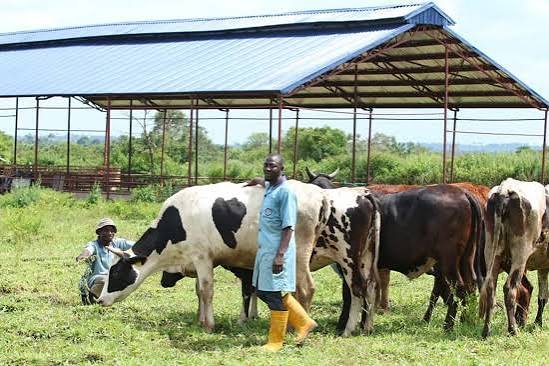
…how Nestlé Nigeria’s Livestock Development Project is helping pastoral communities boost livelihoods, improve local milk production and build a more resilient dairy value chain

by Elvis Eromosele
Long before the sun rises, pastoralists are already caring for their cattle. Their work supports families, local economies and the food that ends up in Nigerian homes. But for many livestock producers it has proven difficult to make a living.
This World Milk Day, the conversation around dairy products goes beyond the milk on the breakfast table. It is also about the people involved, the communities and partnerships building a stronger domestic dairy industry.
Nigeria has a long pastoral tradition and considerable livestock resources. However, local dairy production faces structural challenges. Access to veterinary services, a lack of technical know-how, fragmented supply chains and difficulties connecting with organised markets can limit productivity and incomes. To address these barriers means investing in sustained support, practical know-how and co-operation across the value chain.
Nestlé Nigeria is doing good work in this space. Since 2019 the firm has worked with pastoral communities, dairy cooperatives and development partners through the Livestock Development Project to help address some of these challenges. The initiative focuses on strengthening the capacities of producers, supporting animal health, promoting collective organisation and improving the connections between local milk producers and the wider dairy market.
The reports from the company serve as a good indication of what sustained efforts can achieve.
Now, at the heart of a sustainable dairy industry are the people caring for animals and producing milk. Their skills and access to support will influence not only the quantity but also the quality and commercial value of the produce.
Through the Livestock Development Project, more than 2,000 pastoralists have received training to improve dairy production and management practices. The aim is to provide producers with the practical knowledge needed to improve livestock management, milk hygiene and participation in organised markets.
The project also recognises the importance of collective organisation. With 83 dairy cooperatives established through the initiative, Nestlé Nigeria reports that they create platforms for pastoralists to work together and share knowledge.
As at today, the project has aggregated more than 1.5 million litres of milk. This is an important demonstration of how organised collection can connect local production with wider markets.
Of course, one appreciates the fact the while aggregation can help link disparate groups to processors, it cannot solve every challenge facing the dairy sector. However, it opens up opportunities for locally-produced milk to contribute more meaningfully to domestic supply.
Besides, for pastoralists, cattle are more than livestock. They are productive assets, household wealth and a source of income. Protecting their health is therefore critical to boosting dairy production and financial gains.
As part of the project, more than 36,744 cattle have been vaccinated. The intervention demonstrates the importance of animal health to reduce disease risks and protect livestock owners’ investments.
Healthy animals are essential to a more reliable milk supply. Together with appropriate animal care and hygienic milk-handling practices, herd health interventions can contribute to improved productivity and greater confidence in the quality of milk entering the value chain.
The lesson is clear – dairy development cannot be reduced to simply boosting production. It also means paying attention to ensuring that producers are able to maintain healthy herds, handle milk appropriately and participate in markets that appreciate quality.
Perhaps the most striking report from Nestlé Nigeria is the jump in average monthly producer income from ₦70,000 to ₦250,000. This means an increase of ₦180,000 (257 per cent), with the average income being about 3.6 times higher than previously.
For participating households, higher earnings can create room for meeting everyday needs, investing in livestock management and planning for the future. More sustained income can also help families to prepare for unexpected expenses and build their resilience to economic pressures.
The impact however goes beyond individual households. When agricultural producers earn more, they can contribute to economic activity in their communities by spending money on goods and services, supporting local businesses and investing in their families’ welfare.
While the reported jump in income is encouraging, its long-term significance will depend on whether the conditions underpinning it can be sustained and extended to more pastoral households.
In addition, Nestlé Nigeria is partnering with the Federal Ministry of Livestock Development to support the establishment of the Dairy Technical Skills Development Centre.
The proposed centre represents an opportunity to strengthen the skills base of Nigeria’s dairy sector and support the development of practical expertise. Its long-term impact will depend on how its programmes respond to the needs of pastoralists and other participants across the value chain.
The partnership can also demonstrate the importance of co-operation between the public and private sectors. Government institutions, businesses, development partners and producer communities all have roles to play in addressing the challenges limiting local dairy production.
When these efforts are coordinated, practical experience at the community level can be linked with the technical support and institutional commitment required to expand successful interventions.
The reality is that Nigeria’s ambition to strengthen domestic dairy production will require sustained investment in productivity, animal health, milk collection, processing and building commercially viable relationships between producers and buyers.
The numbers cited above are indicators of progress. The next step is to ensure that the gains are sustained, broadened and contribute to lasting benefits for pastoral communities and a more reliable domestic milk supply.
The World Milk Day provides an opportunity to acknowledge milk’s contributions to nutrition, livelihoods and economic activity. It is also a reminder that the future of Nigeria’s dairy sector depends on the people making production possible.
This is a future worth raising a glass to.

