


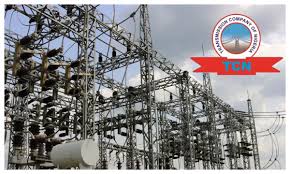
The Transmission Company of Nigeria (TCN) has commissioned two major transmission projects in Lagos, adding significant capacity to the power network serving the Apapa corridor and surrounding industrial, commercial and residential areas.

The projects involve the installation of two 60MVA, 132/33kV gas-insulated substations (GIS) at the upgraded Apapa Road Transmission Substation and two new 100MVA power transformers at the 132/33kV Ijora Transmission Substation.
The projects were commissioned on Monday, August 17, 2026, by Engr. Sule Ahmed Abdulaziz, TCN Managing Director and Chief Executive Officer.
According to TCN, the upgrades have increased the capacity of the Apapa Road Transmission Substation from 60MVA to 180MVA, while the total capacity of the Ijora Transmission Substation has risen to 230MVA, equivalent to about 184MW.
TCN said the additional capacity will increase the volume of electricity available for the Eko Electricity Distribution Company (EKEDC) to distribute to customers across the Apapa corridor.
The areas expected to benefit include Apapa Causeway, Ijora, Amukoko, Ajegunle, Apapa Wharf, Tin Can Island and other major commercial and industrial locations within EKEDC’s franchise area.
Abdulaziz said the Apapa Road upgrade had effectively tripled the substation’s capacity, providing greater room for EKEDC to take more bulk electricity from the transmission network.
He said the upgraded facility comprises two 60MVA, 132/33kV gas-insulated substations that are already in operation.
At Ijora, the installation of two new 100MVA transformers has increased the substation’s overall capacity to 230MVA.
TCN said the projects form part of efforts to strengthen Nigeria’s transmission network and ensure that more electricity generated by power plants can be delivered to distribution companies and ultimately to consumers.
Abdulaziz described electricity as a critical foundation for economic development, noting that reliable power is particularly important for industrial clusters, businesses, healthcare facilities, schools and households.
The Apapa Road project was sponsored and executed by the Japan International Cooperation Agency (JICA) in partnership with TCN.
The investment is particularly significant for Lagos because the Apapa corridor contains major ports, warehouses, factories, businesses and other economic activities that depend heavily on reliable electricity.
TCN said it would continue to rehabilitate and expand transmission substations and lines across the country as electricity demand increases.
The company’s goal is to improve its ability to wheel bulk electricity from generating plants to distribution load centres while reducing constraints within the transmission network.
TCN General Manager, Public Affairs, Ndidi Mbah, had earlier announced the energisation of two 60MVA transformers at the rehabilitated Apapa Road Transmission Substation.
She said the installation of modern gas-insulated switchgear was also expected to improve the facility’s efficiency and reliability.
The latest projects build on other transmission investments in Lagos.
In December 2024, TCN commissioned a 60/75MVA, 132/33kV transformer at the Lekki Transmission Substation, increasing its capacity from 120MVA to 195MVA.
That project expanded the volume of electricity available to EKEDC for distribution to areas including New Maroko, Cheview Estate, parts of Lekki and neighbouring communities.
The Apapa and Ijora projects add further capacity to Lagos’ transmission infrastructure and could help ease some of the constraints associated with supplying electricity to one of Nigeria’s most economically important corridors.
However, the increased transmission capacity will need to be matched by adequate generation and sufficient distribution infrastructure if the additional power is to translate into more reliable electricity for homes and businesses.
For consumers and businesses in the affected areas, the significance of the projects will ultimately be measured not only by the additional megavolt-amperes installed but by improvements in the reliability and quality of electricity delivered to them.

