


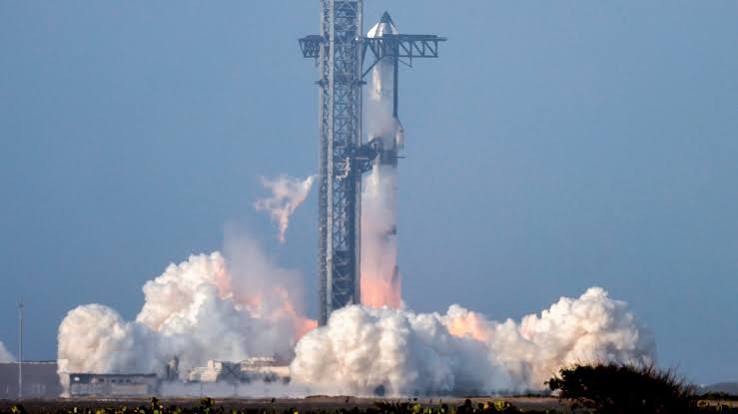
SpaceX is preparing for the most consequential test yet of Starship, the world’s most powerful rocket, as the company attempts to send the massive spacecraft into orbit for the first time.

The test, scheduled for Monday from SpaceX’s Starbase facility in southern Texas, will also see Starship deploy its first batch of next-generation Starlink satellites, potentially marking a major shift from experimental launches to commercial operations.
Liftoff is expected during a 75-minute window beginning at 8:15 a.m. ET.
Starship has completed 13 test flights since 2023, with several ending in explosions or other failures. While those setbacks have provided engineers with data to refine the vehicle, Monday’s mission introduces a new level of risk because the spacecraft will attempt to enter orbit rather than follow a controlled suborbital trajectory.
SpaceX previously placed Starship on what it described as a “passively safe suborbital trajectory.” That meant that even if the spacecraft lost control, it was already travelling along a path that would bring it back into the atmosphere and toward a predetermined splashdown area.
An orbital flight removes that safety margin.
Once Starship reaches orbit, it will be travelling at extremely high speeds around Earth. A loss of control could therefore leave the spacecraft in orbit rather than allowing it to be safely brought down immediately.
Joseph Gonzalez, an associate professor of practice in aerospace engineering at the University of Illinois, said the mission presents numerous potential failure points, including problems with propellant systems or engine ignition.
A malfunction could leave an uncontrolled spacecraft in orbit, potentially creating a hazard for other satellites and orbital infrastructure.
Monday’s mission is expected to last considerably longer than previous Starship tests.
The spacecraft is expected to remain in space for almost 10 hours, deploy 26 Starlink satellites and complete six trips around Earth before beginning its return journey.
The spacecraft will then attempt to re-enter the atmosphere and make a controlled upright landing in the Pacific Ocean off the coast of Chile.
The Super Heavy booster, which provides the enormous thrust needed to lift Starship from the launchpad, will also attempt another controlled landing over the ocean.
The booster experienced an engine problem during the previous test flight in July, when only eight of its 13 engines successfully relit during the landing sequence.
SpaceX said it has introduced hardware modifications to improve engine filtering and software changes designed to make engine relighting more reliable.
The booster will not, however, attempt to return to land. That capability remains part of SpaceX’s longer-term plan to eventually catch and rapidly reuse both stages of the rocket.

