


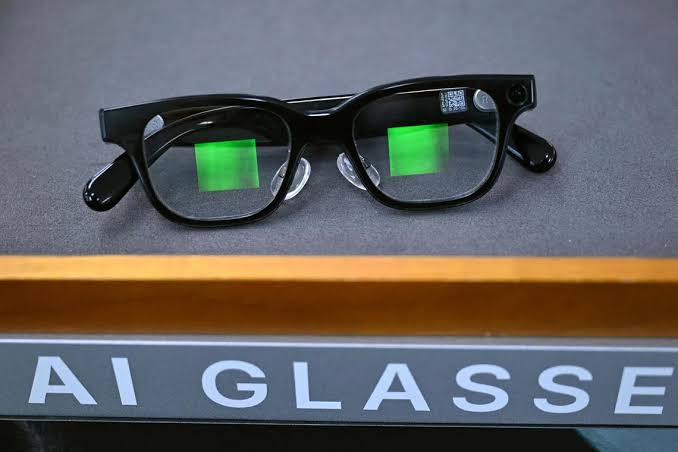
South Korea will subject glasses worn by students to thorough inspections during this week’s national university entrance examination following a cheating scandal involving artificial intelligence (AI) and smart glasses. The decision comes after the top scorer in the country’s notoriously difficult tax accountant examination admitted to using a miniature camera, a mobile phone and AI technology to cheat, raising concerns about the integrity of high-stakes examinations.

Education Minister Choi Kyo-jin announced the new measures before parliament, saying all glasses worn by candidates would be checked during examination sessions to prevent the use of smart devices. The minister said smart glasses had been added to the list of prohibited items in examination halls, warning that candidates caught using electronic devices to cheat could face criminal punishment.
The move follows a directive from Prime Minister Han Sung-sook, who summoned officials to a meeting on Monday and instructed the education ministry to ensure that candidates surrender prohibited smart devices before examinations begin.
About 550,000 students are expected to sit for the College Scholastic Ability Test (CSAT) on Thursday. The examination, which lasts about eight hours, is a major determinant of university admission and future career prospects in South Korea’s highly competitive society.
The annual examination is so significant that it brings much of the country to a standstill. Flights are suspended during the English listening comprehension section to prevent noise from disrupting candidates. The latest security measures were introduced after the top-performing candidate in the country’s tax accountant examination confessed to cheating following months of questions about his unusually high score.
In a video released online on Sunday, the candidate apologised for his actions and disclosed that he had used a miniature camera, his phone and AI to obtain answers. He also said he had reported himself to Seoul police.
“I cheated on the tax accountant exam. I sincerely apologise for causing damage to a lot of people,” he said.
He also warned prospective candidates against attempting similar tricks in the upcoming university entrance examination, saying he would provide investigators with information about cheating methods. The incident has renewed concerns about how rapidly advancing AI technology is making examination malpractice more sophisticated.
Unlike conventional cheating methods, AI-enabled smart glasses can capture examination questions through miniature cameras and relay answers to candidates through discreet audio systems within seconds.
The devices, which integrate cameras, microphones, speakers, sensors and AI-powered systems, are increasingly becoming a challenge for examination authorities.
The technology is also moving beyond niche markets. US technology giant Meta introduced its first AI-enabled Ray-Ban smart glasses in 2023 and has since expanded its product range. More than seven million pairs were reportedly sold in 2025 alone.
Concerns are particularly pronounced in East Asia, where intense competition for university admission and professional qualifications has made examination integrity a major issue.
Earlier this year, two South Korean students were caught using smart glasses during an English proficiency examination, whose results are often considered in recruitment decisions.
In Taiwan, examination supervisors discovered that a candidate seeking admission to a leading medical school was wearing smart glasses after noticing unusual behaviour. An inspection revealed that the frames were emitting heat.
China has also tightened examination security. During its annual university entrance examination in June, which attracts more than 10 million candidates, authorities required the screening of glasses worn by students.
The developments highlight a growing challenge for education authorities worldwide: as AI-powered wearable devices become more accessible, traditional examination security measures may no longer be sufficient to prevent sophisticated forms of cheating.

