


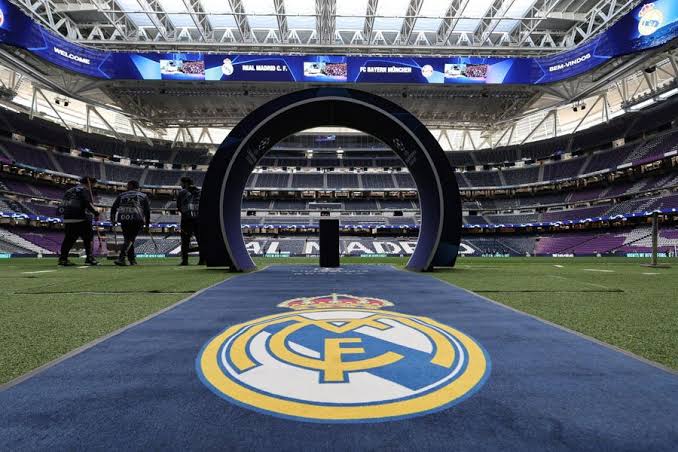
…Despite a trophyless season, the Spanish giants posted record revenue and profits, driven by the revamped Santiago Bernabéu and booming commercial partnerships.

Real Madrid has become the first sports club in history to generate more than €1.2 billion in annual operating revenue, underscoring the growing importance of commercial strength and stadium investments over on-field success.
The Spanish football giant reported a record €1.221 billion in operating revenue for the 2025–2026 financial year, despite failing to win a major trophy during the season.
The club also posted record earnings before interest, taxes, depreciation and amortisation (EBITDA) of €287.4 million, an 18 per cent increase from the previous year, while net profit after tax rose 8 per cent to €26.3 million. The latest results mark the 26th consecutive year Real Madrid has recorded a profit.
A major contributor to the club’s financial performance was the redeveloped Santiago Bernabéu Stadium, which has transformed into a year-round commercial hub.
Revenue generated from the stadium climbed to €363 million, more than double the level recorded before the redevelopment project began in 2019.
The renovation, which has attracted cumulative investment of more than €1.4 billion, has expanded the stadium’s earning capacity beyond matchdays through concerts, events, hospitality and other commercial activities.
Although Real Madrid reported net debt of €9 million, excluding stadium-related financing, it ended the financial year with €83 million in cash and access to €475 million in undrawn credit facilities, providing ample financial flexibility as it continues to service redevelopment costs.
Club management said the enhanced earning power of the Bernabéu will continue to support long-term financial obligations.
Real Madrid’s commercial operations also recorded another year of impressive growth.
Marketing revenue increased to €539 million, boosted by renewed sponsorship agreements and new commercial partnerships. While revenue from official merchandise declined slightly, stronger sponsorship, licensing and commercial deals more than compensated for the drop.
The club said total revenue has grown by 61 per cent since the 2018–2019 season, with 93 per cent of that increase coming from businesses under its direct control rather than television broadcasting income.
The figures reflect a deliberate strategy to diversify revenue streams and reduce reliance on broadcasting rights and prize money.
Despite its record financial performance, Real Madrid continued to invest heavily in its sporting operations.
The club spent €192 million on its football and basketball teams, facilities and technology during the financial year, including €161 million on player acquisitions.
Sports-related costs also increased, but wages and player amortisation accounted for 46 per cent of total revenue, remaining below the 50 per cent threshold widely viewed in football as a benchmark for financial sustainability.
Real Madrid’s latest financial results highlight a broader shift in the economics of elite football.
While trophies remain vital for strengthening a club’s brand and attracting fans and sponsors, the Spanish giants have demonstrated that sustained financial growth can increasingly be driven by infrastructure, commercial partnerships and diversified revenue streams.
The transformation of the Santiago Bernabéu into a multi-purpose entertainment venue, alongside expanding sponsorship and licensing income, has reduced the club’s dependence on prize money and broadcasting revenue.
The results reinforce a growing trend among Europe’s leading clubs: long-term investment in modern stadiums, fan experiences and commercial operations is becoming just as important as success on the pitch in building sustainable financial strength.

