


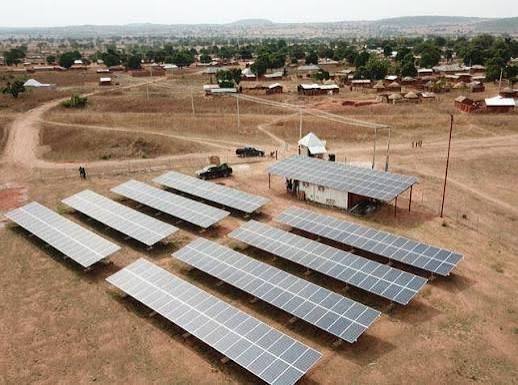
The Rural Electrification Agency (REA) has launched a new initiative to promote local manufacturing of solar panels and battery storage systems as part of efforts to reduce Nigeria’s dependence on imported renewable energy equipment and expand access to electricity.

The move comes as more than 85 million Nigerians, about 40 per cent of the population, still lack reliable access to grid electricity.
The initiative was unveiled in Abuja during the signing of a Joint Development Agreement between the REA and Ecotech Development Nigeria Limited.
The partnership will establish a solar panel and battery assembly and manufacturing facility in Nigeria, supporting the Federal Government’s drive to improve energy access, create jobs and conserve foreign exchange.
Speaking at the signing ceremony, Abba Aliyu, REA Managing Director and Chief Executive Officer, described the agreement as a major milestone in Nigeria’s renewable energy transition.
He said it marks the first time a Tier-1 Chinese renewable energy company has committed to setting up manufacturing and assembly operations in Nigeria. “Over 85 million Nigerians, close to 40 per cent of our population, still lack reliable access to grid electricity. REA exists to close that gap,” Aliyu said.
He noted that most solar systems deployed across Nigeria rely entirely on imported components. “Every electrified community across Nigeria today tells the same quiet story. The panel on the rooftop was engineered abroad. The battery beneath it was assembled abroad. The inverter that ties it together was also manufactured outside the country.”
According to him, Nigeria has provided the market for renewable energy products while other countries have benefited from the industrial and economic value associated with their production.
Aliyu said continued reliance on imported solar equipment has cost Nigeria jobs, technical expertise and valuable foreign exchange.
Under the agreement, the REA, through its renewable asset management subsidiary, will facilitate the annual offtake of up to 200 megawatts (MW) of locally manufactured solar photovoltaic modules and 200 megawatt-hours (MWh) of battery energy storage systems produced by Ecotech.
He explained that the framework is non-exclusive and will operate in line with existing public procurement regulations.
The local manufacturing initiative is expected to:
- Reduce dependence on imported renewable energy equipment.
- Shorten delivery timelines for solar developers.
- Create skilled jobs and develop local technical expertise.
- Retain more foreign exchange within the Nigerian economy.
- Strengthen domestic renewable energy value chains.
Aliyu added that the project aligns with President Bola Tinubu’s ambition of building a $1 trillion economy by 2030 through industrialisation led by the private sector.

