


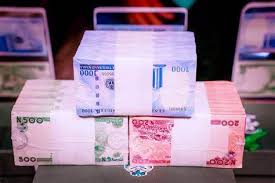
Nigeria’s cash-based economy remained firmly entrenched in 2025, with the vast majority of physical money circulating outside the formal banking system, according to the Central Bank of Nigeria (CBN).

CBN money and credit statistics show that in November 2025, currency outside banks stood at ₦4.91 trillion, out of a total ₦5.26 trillion in circulation. This means 93.35 per cent of all cash in the country was held outside banks, leaving only a small fraction within the formal financial system.
The figures indicate that cash hoarding outside banks has become a structural trend, not a temporary response to policy shifts.
The November ratio rose from 91.87 per cent in October, when ₦4.65 trillion of ₦5.06 trillion in circulation was held outside banks. The increase points to rising cash demand in the informal economy and continued reluctance to keep money in banks.
Throughout 2025, the share of cash outside banks remained above 89 per cent. The year began in January with 90.49 per cent, climbed through the first quarter, and rose further in the second half of the year, staying above 92 per cent in August, September and November.
In effect, Nigeria has spent nearly two consecutive years with more than nine out of every ten naira notes circulating outside the banking system.
Total currency in circulation rose to ₦5.26 trillion in November, the highest level recorded in 2025. This reflects increased cash usage as households and businesses adjusted to rising prices and higher year-end spending.
Year-on-year, currency in circulation increased by ₦383.7 billion, from ₦4.88 trillion in November 2024. However, the share of cash held by banks did not grow significantly, suggesting that most new cash flowed into the informal sector rather than boosting deposits.

