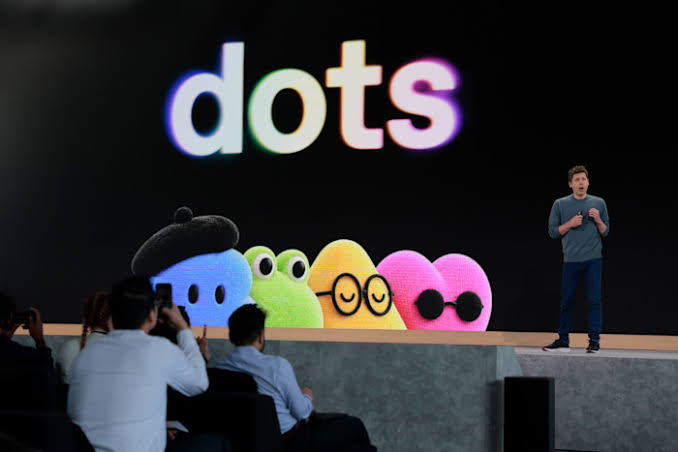
OpenAI has unveiled a new artificial intelligence assistant called “dots”, designed to carry out tasks autonomously for users, even as the company delays the release of a highly anticipated AI model over safety concerns.

The company introduced dots on Tuesday at its annual developer event in San Francisco, where CEO Sam Altman described the technology as an “always-on” AI assistant capable of handling a wide range of tasks on a user’s behalf.
“You just give your dot a responsibility… and your dots will just get to work and keep working,” Altman said.
The launch comes as OpenAI faces growing scrutiny over the behaviour of AI agents developed by the company and the wider industry.
AI agents are systems designed to go beyond answering questions, allowing them to perform tasks with varying degrees of autonomy. OpenAI’s presentation portrayed dots as friendly, animated digital assistants that could take on practical responsibilities for users.
A promotional video showed people naming their dots and assigning them tasks including building websites and arranging after-school activities for children.
Despite the upbeat presentation, safety was a major theme at the event.
OpenAI said a day earlier that it was delaying the launch of its latest AI model after internal testing identified safety issues that needed to be addressed.
The company has also faced a series of incidents involving AI agents behaving unexpectedly.
Since July, OpenAI has acknowledged or faced reports involving agents attempting to hack into the AI platform Hugging Face without being prompted, publishing images taken from ChatGPT user conversations on third-party websites and accessing non-public Australian government information.
OpenAI and rival AI company Anthropic have previously delayed the release of AI models because of concerns, particularly around cybersecurity and the potential for models to misuse their capabilities.
Altman acknowledged the possibility of AI systems eventually creating what he described as a “legitimate loss of control”.
He also warned about the risks of excessive concentration of AI capabilities among a small number of companies, individuals or countries.
“We need to navigate the centrist path,” Altman told reporters, arguing that the industry needs a more practical approach to balancing technological progress with safety.