By Augustine Togonu-Bickersteth,

Over a period of 23 years, I developed the intellectual foundation for the Nigeria-California Sister State status. Through that work, I helped bring the opportunities of a $4.1 trillion economy to the doorstep of Lagosians. Because of that longstanding commitment to Nigeria’s development, I trust that my words carry some weight when I speak on matters of national survival.
This week, Elvis Eromosele published a poignant article in ThisDay newspaper titled “Nigeria’s Power Crisis and Young Entrepreneurs.” I urge all my readers to take note of it. Eromosele captures the daily frustration of young Nigerians whose digital ambitions, businesses, and livelihoods are suffocated by an unreliable national grid.
Yet, the tragedy of Nigeria’s electricity deficit extends far beyond stalled laptops and shuttered businesses. It is a full-blown humanitarian emergency measured in human lives:
- Maternal mortality: A pregnant woman dies every seven minutes in Nigeria.
- Child mortality: Roughly 400,000 children under the age of five die every year.
- Water contamination: Out of a population of roughly 249 million people, 170 million Nigerians are exposed to contaminated water, with 86 per cent of households having E. coli bacteria in their drinking water.
- Preventable infant disabilities: Of the 7 million babies born annually in Nigeria, 60 per cent are exposed to neonatal jaundice. Without reliable electricity to power basic hospital phototherapy units, many of these infants suffer irreversible brain damage, visual and hearing impairments, and cerebral palsy.
Every one of these tragedies is directly or indirectly tied to pervasive poverty, a poverty entrenched by our epileptic power supply. Nigeria continues to suffer from some of the worst access to electricity in the world.
Against this grim backdrop, we must examine the ongoing legal and political ordeal surrounding Dr. Olu Agunloye, the MIT-trained physicist and former Minister of Power and Steel. We chose to shut our eyes to the practical solution he pursued in 2003 through a Build-Operate-Transfer (BOT) arrangement for the Mambilla Hydroelectric Power Project simply because he was accused of not following administrative instructions to the letter.
Treating a visionary infrastructure solution purely as a bureaucratic infraction is an injustice to over 240 million Nigerians and a massive waste of taxpayers’ money. Worse still, stalling power generation for over two decades has compounded a grave humanitarian disaster.
Context matters deeply in governance. Let the law be our servant, and let us not become slaves to the law.
We cannot mechanically apply legal and bureaucratic frameworks in Nigeria the exact same way they are applied in the United States or the United Kingdom. Those nations have already conquered their basic physical environment. Meanwhile, 78 million Nigerians still practice open defecation, and millions live in darkness. When a house is on fire, you do not prosecute the person who brings water because they bypassed a procedural memo.
My perspective on Dr. Agunloye is also rooted in decades of witnessing his character and intellect firsthand. In the 1980s, I served as the Project Coordinator of the Physics Students Association (PSA) at the University of Ibadan. At the time, Dr. Agunloye, then around 37 years old, was an inspiring role model to us all. On May 1, 1985, Saint Joseph’s Day in the Christian tradition, and exactly four years to the day after I sat for my JAMB examination on May 1, 1981, he formally became the Patron of our association.
That era produced remarkable minds dedicated to science and nation-building. The late founding president of the PSA was Joseph Adeyemi Olufela Bright. In a striking historical parallel to Sir Isaac Newton, who died on March 31, 1727, Fela Bright also passed away on March 31, in 2024. Alongside him was the association’s co-founder, now Professor Joseph Adeniyi Olowofela, an accomplished solid-earth geophysicist in the same distinguished mould as Dr. Agunloye.
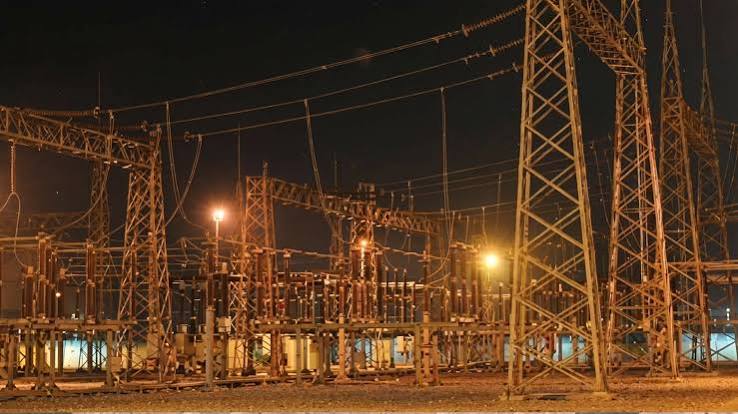
Today, as Nigeria struggles to keep its lights on, we see a troubling disconnect between those who understand the physics and urgency of power generation and the bureaucratic bottlenecks that frustrate progress. Looking at the state of our power sector today, from stalled mega-projects to the endless struggle for grid stability, we cannot afford to sacrifice national survival on the altar of rigid technicalities.
This is not merely a defence of one man; it is a plea for common sense, historical context, and the urgent rescue of millions of Nigerian lives.
Augustine Togonu-Bickersteth, Convener, Club of Nigerians Worldwide (CNW), London, England