


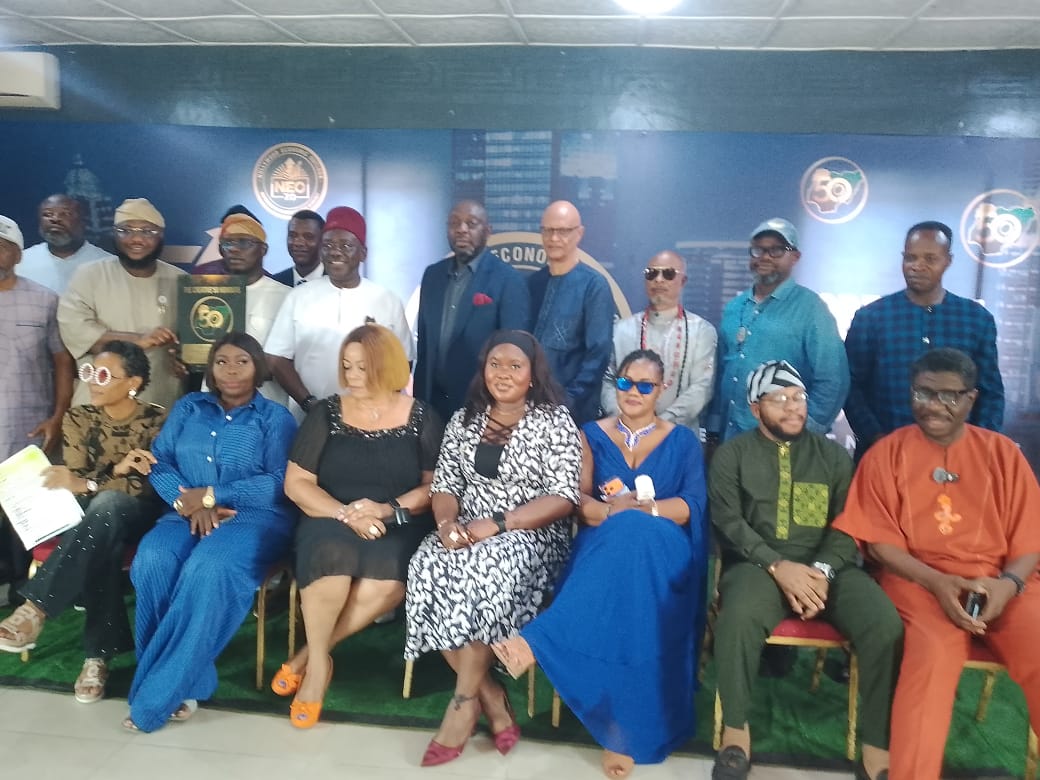
At a defining moment for Nigeria’s creative economy, industry leaders, filmmakers, innovators, and policymakers converged at the Nollywood Economic Outlook (NEO) 7.0, held at the Sheba Event Center, Maryland, Lagos. With the theme “The Next Frontier,” the event offered a deeply reflective and forward-looking examination of Nollywood’s evolution, highlighting the urgent need for data-driven decision-making, technological adoption, and structural reforms to unlock the industry’s full economic potential.

Delivering a comprehensive industry overview, Patrick Lee set the tone with a sweeping analysis of Nigeria’s cinema landscape. A central figure in the growth of the country’s exhibition sector, Lee pointed to the expansion of cinema screens from 140 to 347 as evidence of increasing sophistication within the ecosystem.
Yet, beyond physical growth, his message was firmly anchored on the importance of data. He revealed that 52 per cent of cinema audiences are women, a statistic that underscores the need for filmmakers and distributors to better understand and cater to audience demographics. However, he challenged stakeholders to confront a more pressing issue: the absence of structured, accessible industry data. In a rapidly evolving global film economy, he argued, intuition is no longer sufficient, data must guide production, marketing, and distribution decisions.
This emphasis on intelligence over instinct flowed seamlessly into discussions on the role of technology, particularly Artificial Intelligence, in reshaping the future of filmmaking. Automation expert Emeka Okemadu delivered a compelling exploration of AI’s growing influence across the film value chain. He described AI as machine intelligence powered by data, capable of transforming every stage of production, from ideation and scriptwriting to post-production and marketing. According to him, AI tools can assist in developing story concepts, building characters, and even predicting which films are likely to succeed based on audience behaviour and trends.
Beyond creative support, AI is driving significant efficiencies in production. Okemadu explained that filmmakers can now use advanced tools to create environments, enhance visual storytelling, and streamline editing processes. In post-production, AI’s impact is even more pronounced, enabling the rapid creation of trailers, posters, and promotional assets. These capabilities, he noted, can reduce production costs by over 60 percent while drastically shortening timelines, effectively allowing filmmakers to produce more content and scale their operations.
Yet, as transformative as AI promises to be, it also raises important questions about rights, ownership, and industry readiness. Okemadu called for deliberate efforts to sensitise actors and creatives about the implications of AI, particularly the emerging opportunities to monetise their image, voice, and intellectual property.
He also stressed the need for legal frameworks to protect stakeholders in this new digital reality. Framing the conversation within a broader historical context, he noted that every major technological shift has initially been perceived as a threat, but those who adapt early ultimately gain the most. In his words, “AI will not replace actors; rather, actors who embrace AI will outpace those who resist it.”
Throughout the event, a unifying theme emerged, Nollywood’s next frontier is not defined solely by technology, but by mindset. The industry must transition from largely informal practices to structured, data-driven systems. It must strengthen its distribution and exhibition frameworks, align with global standards, and invest in continuous capacity building. Platforms like the Nollywood Economic Outlook were repeatedly highlighted as essential spaces for dialogue, knowledge-sharing, and strategic alignment.

Adding a celebratory flourish to the proceedings was The Creative 50 Honours, a segment dedicated to recognising individuals whose work continues to shape and elevate Nigeria’s creative landscape. Among the distinguished honourees was Seyi Jakande, celebrated for his unwavering support and advocacy that drive innovation and expansion across the sector. Dr. Oluwasesan Fagbayi was conferred with the Distinguished Leadership in Public Service Award, while Idris Aregbe received the Outstanding Public Service Leadership Award. The Creative Industry Leadership & Impact Award went to Patrick Lee in recognition of his transformative contributions to cinema growth. Veteran actor Tony Akposheri was honoured with the Nollywood Legacy & Impact Award, as Dr. Ola Awakan earned the Creative Industry & Public Service Leadership Award. Rounding off the honours, acclaimed filmmaker Lancelot Oduwa Imasuen was recognised with the Excellence in African Storytelling Award, underscoring his enduring influence on the continent’s cinematic narrative.
As the curtains closed on NEO 2026, the message resonated with clarity and urgency. Nollywood stands at the threshold of transformation. To fully realise its potential as a global creative and economic force, it must embrace data, adopt emerging technologies, protect its creative assets, and build sustainable systems that can support long-term growth. The next frontier is here, and the industry’s ability to navigate it will determine not just its future, but its place on the global stage.

