


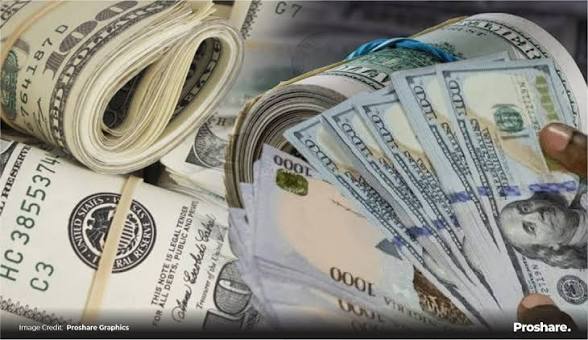
Nigeria’s net foreign exchange reserves have climbed to a record $46 billion, while gross external reserves have surpassed $55 billion, strengthening the country’s capacity to meet external obligations and boosting investor confidence.

Olayemi Cardoso, Governor of the Central Bank of Nigeria (CBN), disclosed this on Thursday at the Nigeria-Asia Connectivity Dialogue, attributing the improved outlook to stronger reserves and relative stability in the foreign exchange market.
“The gross foreign reserves are now at an all-time high of $55 billion. Our net reserves is at US$46 billion. In addition to that, the foreign exchange market is stable. These are the things that give investors confidence. You can plan. You can bring in money and take it out,” Cardoso said.
The latest figure represents an increase of about $11.2 billion from the $34.80 billion in net foreign reserves reported at the end of December 2025.
Net foreign reserves provide an indication of the CBN’s available foreign exchange buffers after accounting for near-term liabilities, including obligations arising from foreign exchange swaps and forward contracts.
The increase marks a significant improvement from the position in 2023, when Cardoso said Nigeria had approximately $3 billion in net reserves. He also disclosed that the figure had fallen below $1 billion at the height of the country’s foreign exchange crisis.
Nigeria’s gross external reserves have also recorded sustained growth in 2026.
The reserves stood at $54.08 billion as of September 3 and rose to $54.61 billion by September 14, representing a year-on-year increase of $12.76 billion, according to figures cited in the report.
Cardoso’s latest disclosure puts gross reserves above $55 billion, exceeding the CBN’s earlier projection of approximately $51.04 billion by the end of 2026.
The growth in reserves comes amid relative stability in the official foreign exchange market, with the naira trading around N1,330 to the dollar in recent sessions.
The naira closed at N1,332.75 per dollar at the Nigerian Foreign Exchange Market (NFEM) on October 7, compared with N1,331.50 on October 6.
Foreign exchange market turnover also crossed $1 billion earlier in the week, reaching $1.014 billion on October 6, up from $619.22 million recorded the previous day.
CBN data showed that the naira traded between N1,330.50 and N1,332.99 per dollar on October 7, with a weighted average rate of N1,331.7679.
The relatively narrow trading range contrasts with the significant exchange-rate volatility that followed Nigeria’s foreign exchange market reforms.
According to Cardoso, stronger reserves and greater stability in the foreign exchange market are helping investors plan their investments with greater confidence, including bringing funds into the country and repatriating returns.

