


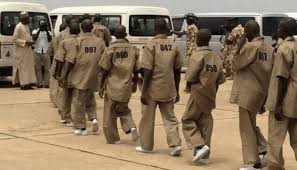
Nigeria’s reintegration programme for “repentant” terrorists and bandits was conceived as a pragmatic alternative to an endless war. Nearly a decade later, it is increasingly clear that the policy sits on a fragile foundation—one strained by weak oversight, questionable incentives, and a widening gap between government intent and public trust.

At its core, the initiative, anchored by Operation Safe Corridor, reflects a familiar doctrine in conflict resolution: you cannot kill an ideology with bullets alone. In theory, deradicalisation, rehabilitation, and reintegration offer a pathway to reduce the number of active fighters, weaken insurgent networks, and address the socio-economic roots of extremism. In practice, however, Nigeria’s execution raises uncomfortable questions about cost, fairness, and long-term security.
Estimates that between N150 billion and N250 billion have been spent on amnesty-related programmes since 2016 should provoke serious scrutiny. In a country battling fiscal constraints, rising debt, and underfunded social services, such spending demands rigorous accountability. Yet, transparency remains thin.
Without clear public audits, Nigerians are left to speculate: How many individuals have been successfully reintegrated? What metrics define “success”? How many have relapsed into violence? In the absence of credible data, the programme risks being perceived not as a strategic investment in peace but as an opaque drain on public resources.
Perhaps the most critical flaw lies in verification. The integrity of any reintegration programme depends on a robust system to distinguish genuinely reformed individuals from opportunistic actors seeking state benefits.
Current concerns about weak screening processes point to a dangerous loophole. If individuals can cycle in and out of violence, a “revolving door” scenario, the programme does not just fail; it actively undermines security. It signals that the consequences of terrorism may be temporary, negotiable, or even reversible.
This credibility gap feeds public scepticism. Communities expected to receive former combatants remain unconvinced, and understandably so. Trust, once broken by violence, cannot be restored through administrative processes alone.
One of the most damaging perceptions surrounding the programme is the apparent imbalance between support for ex-combatants and neglect of victims.
Across conflict-affected regions, thousands remain displaced, struggling for survival in IDP camps with limited government assistance. Yet, former fighters are offered rehabilitation, training, and financial support. This inversion of justice, where perpetrators appear to receive more structured support than victims, risks breeding resentment and eroding the moral authority of the state.
Peacebuilding cannot succeed where justice feels absent. A system that appears to reward violence, however unintentionally, creates what economists call a perverse incentive: the idea that taking up arms may be a viable pathway to recognition and rehabilitation.
Supporters often point to the 2009 Niger Delta amnesty as proof that such programmes can work. But this comparison is, at best, incomplete.
Militancy in the Niger Delta was largely resource-driven, with clear economic grievances and identifiable leadership structures. By contrast, insurgency in the Northeast is deeply ideological, decentralised, and transnational. Deradicalising individuals shaped by extremist doctrine is a far more complex and uncertain process than negotiating with militants over resource control.
Applying the Niger Delta template to terrorism risks oversimplifying a fundamentally different conflict.
Another structural weakness is the limited involvement of host communities. Reintegration is not just about transforming ex-combatants; it is about rebuilding trust within society.
When communities are neither consulted nor prepared, reintegration becomes an imposition rather than a reconciliation process. Fear, suspicion, and social fragmentation inevitably follow. Without community buy-in, even genuinely reformed individuals face stigma and isolation, conditions that can increase the risk of relapse.
There is no denying that a well-designed reintegration programme holds potential benefits. Reducing the number of fighters, offering alternatives to violence, and breaking recruitment cycles, especially among women and children, are legitimate and necessary goals.
But the Nigerian experience illustrates a paradox: a poorly implemented reintegration strategy can produce the opposite effect. Instead of weakening insurgency, it may legitimise it. Instead of fostering peace, it may deepen insecurity.
Nigeria does not have the luxury of abandoning non-military solutions. But neither can it afford a flawed reintegration framework. The way forward requires decisive reforms:
- Transparency and accountability: Publish audited figures, outcomes, and performance metrics.
- Stricter screening: Establish credible, independent mechanisms to verify genuine repentance.
- Victim-centred approach: Balance support for ex-combatants with meaningful rehabilitation for victims.
- Community integration: Involve local stakeholders in planning and implementation.
- Phased reintegration: Gradual, monitored re-entry into society, possibly outside immediate communities.
Ultimately, the question is not whether reintegration is necessary, it is whether Nigeria is getting it right.
For now, the programme remains a high-stakes gamble. If reformed, it could become a cornerstone of sustainable peace. If left unchecked, it risks entrenching a dangerous cycle where violence is not just punished but, paradoxically, rewarded.

