
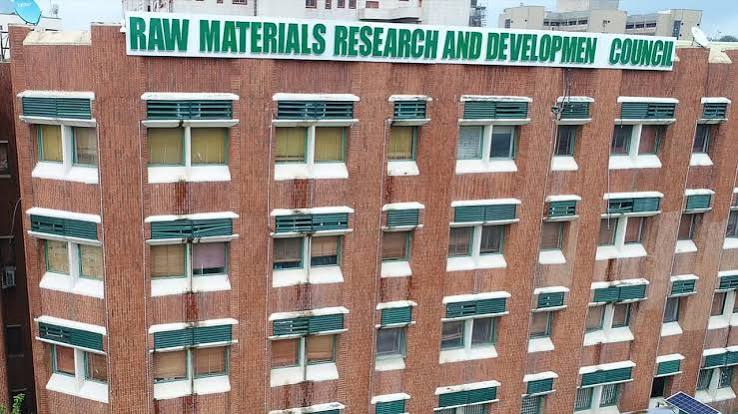
Nigeria’s vast natural resource endowment has yet to translate into commensurate jobs, industrial growth and economic value, the Raw Materials Research and Development Council (RMRDC) has said.

The Council said Nigeria’s subsoil contains more than $582.4 billion worth of documented non-renewable natural resources, but the country remains heavily dependent on the export of largely unprocessed raw materials.
Prof. Nnanyelugo Ike-Muonso, Director-General and Chief Executive Officer of RMRDC, disclosed this in Abuja on Tuesday at a press briefing ahead of the second Africa Raw Materials Summit (ARMS 2026).
Ike-Muonso said Africa’s 54 countries were endowed with significant deposits of critical transition minerals, agricultural raw materials and industrial feedstock, but had yet to fully harness these resources for domestic industrialisation and job creation.
He said the continent’s continued reliance on raw commodity exports exposed African economies to international price shocks, put pressure on national currencies and limited opportunities for the continent’s growing youth population.
According to him, greater domestic processing, value addition, technology development and investment in resource-based manufacturing could help reverse the trend.
“ Africa must move beyond extracting resources and exporting them in their raw form. What is extracted from African soil must increasingly be transformed on African soil,” he said.
The RMRDC boss announced that the second edition of ARMS would hold on October 19 and 20, 2026, at the Abuja Continental Hotel, under the theme, “From African Feedstock to African Factories.”
He said the summit would bring together policymakers, investors, technology providers, researchers and industrialists to develop practical solutions for transforming raw materials produced across Africa into finished and semi-finished products on the continent.
“This summit marks an inflexion point where policy, capital, technology and political will align to ensure that what is extracted from African soil is transformed on African soil,” Ike-Muonso said.
He said ARMS 2026 would build on the maiden edition held in May 2025, which attracted more than 1,000 delegates from around the world.
The inaugural summit also provided a platform for the unveiling of the Ten-Year Raw Materials Transformation Roadmap (2025–2034), which provides a framework for developing local technological capabilities, climate-resilient processing and backward integration.
Ike-Muonso said RMRDC had since introduced several reforms aimed at repositioning the raw materials sector and strengthening its contribution to industrial development.
One of the initiatives is the proposed Raw Materials 30 Per Cent Mandatory Value Addition Bill, which seeks to establish a statutory minimum level of value addition to Nigerian raw materials before they are exported.
According to him, the proposed legislation is projected to create more than 1.2 million skilled jobs within five years, reduce foreign exchange pressures through import substitution, strengthen foreign reserves and increase manufacturing’s contribution to the Gross Domestic Product.
He also highlighted the Nigeria Integrated Information Statistical System for Raw Materials and Products (NISSRAMP), a digital repository designed to provide information on raw material deposits, specifications, production output and industrial absorption.