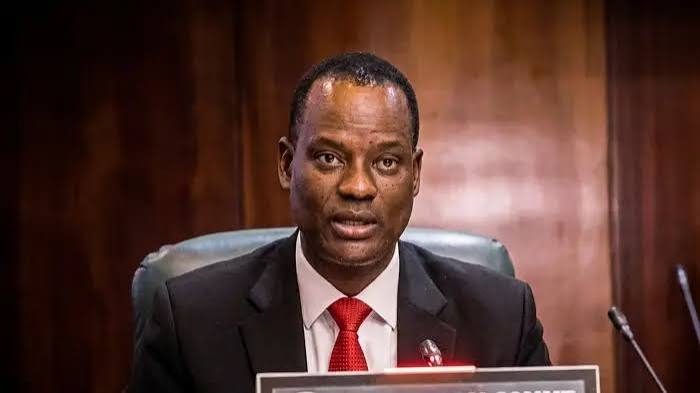
Nigeria has proposed the establishment of a $10 billion African Union (AU) Peace Fund over the next decade, as the continent seeks to strengthen its financial independence and reduce reliance on external development assistance. The proposal, put forward by Taiwo Oyedele, the Minister of Finance and Coordinating Minister of the Economy, is aimed at creating a sustainable financing mechanism for peace and security initiatives across Africa.

According to a statement from the Ministry of Finance, Oyedele presented the proposal at the 27th Extraordinary Session of the AU Executive Council on Financing the Union in Accra, Ghana. He recommended that the proposed fund be financed through contributions from member states, philanthropy and African capital, with investments managed along sovereign wealth fund principles to generate sustainable returns.
The investment returns would provide a recurring source of funding for peace initiatives, while the principal would be preserved to ensure the fund’s long-term sustainability. The proposal represents a more ambitious target than the existing $1 billion Peace Fund target under consideration, although Nigeria indicated its willingness to support the initial proposal.
Oyedele highlighted the African Union’s dependence on external financing, noting that member states currently fund only 25 per cent of the organisation’s budget and contribute just 4 per cent of programme funding, against a target of 75 per cent. He warned that declining development assistance makes it increasingly urgent for African countries to strengthen domestic resource mobilisation and develop sustainable financing arrangements for continental institutions.
Nigeria supports reforms to the AU’s financing structure but insists that implementation must be guided by three principles: fiscal discipline, institutional efficiency and financial leverage. On fiscal discipline, the minister advocated concentrating resources on fewer, high-impact priorities, supported by a credible medium-term fiscal framework and performance-linked spending ceilings.
He also called on technical experts of the Forum of Finance Ministers F15 to validate projections that could raise member states’ contributions to $779 million by 2031, almost four times the current ceiling. However, he stressed that the proposed increase must be carefully assessed against the fiscal constraints facing African economies.
On institutional efficiency, Oyedele called for the elimination of 29 identified areas of duplication within the African Union, which he said could cost the organisation as much as $36 million. He urged the AU Commission to implement outstanding audit recommendations and explore additional revenue sources, including income generated from AU-owned properties.
The proposed measures are intended to reduce administrative waste, eliminate overlapping responsibilities and improve the organisation’s overall financial management. Regarding the Peace Fund, Oyedele cautioned against spending its principal, advocating the retention of the interest-only rule until a sustainable replenishment mechanism is established.
Under this arrangement, investment returns would finance peace initiatives, while contributions from member states, philanthropic organisations and other sources would help build and replenish the fund. He also urged African countries with outstanding financial commitments to fulfil their obligations within an agreed timeframe.