


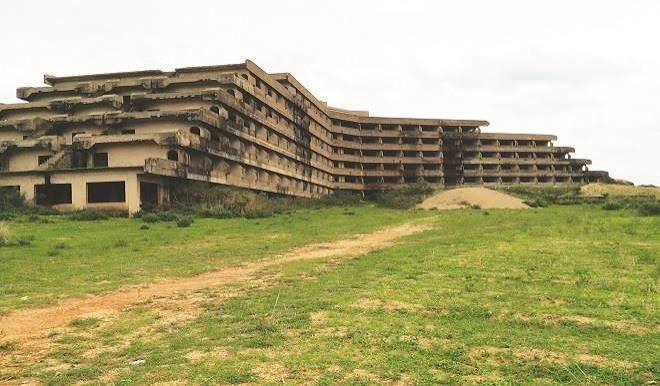
Nigeria loses an estimated N17 trillion annually to abandoned and uncompleted projects, highlighting the economic cost of poor project planning, weak implementation and inadequate accountability in the public sector.

John Enoh, Minister of State for Industry, Trade and Investment, disclosed this at the 8th Annual Induction and Conference of the Chartered Institute of Project Managers of Nigeria (CIPMN).
Enoh, who was represented by the ministry’s Permanent Secretary, Chris Osa Isokpunwu, said abandoned projects continue to tie down public resources that could otherwise support infrastructure development, industrial expansion, job creation and essential social services.
He noted that the consequences extend beyond the financial losses, as communities are deprived of critical facilities and services when government projects remain unfinished.
According to him, the situation is reflected in hospitals that have been constructed but remain unopened, schools unable to accommodate students, roads that fail to connect communities and electricity projects that have not delivered their intended benefits.
The minister called for stronger project management systems across ministries, departments and agencies (MDAs) to improve project planning, execution, supervision and evaluation.
He stressed that effective project management was essential to ensuring that public investments deliver measurable economic and social benefits rather than becoming stranded assets.
Also speaking at the conference, Henry Ifeanyi Mbadiwe, Registrar-General and Chief Executive Officer of CIPMN, identified poor project management as a major obstacle to Nigeria’s development.
Mbadiwe cited findings by the Presidential Projects Assessment Committee, which identified 11,886 ongoing federal capital projects in 2011, with an estimated financial commitment of N7.78 trillion.
He said inadequate planning, weak supervision, poor accountability and implementation failures were among the major factors responsible for the high incidence of abandoned projects across the country.
The CIPMN chief executive also disclosed that the institute had developed a project management curriculum for Nigerian universities, which has received approval from the National Universities Commission (NUC).
The programme is expected to allow universities to offer project management as a bachelor’s degree, helping to develop a pool of professionals equipped to manage complex projects and improve delivery standards.
In a move to strengthen accountability and improve implementation, Enoh disclosed that the Federal Ministry of Industry, Trade and Investment had introduced a 90-day reporting cycle for tracking the execution of government programmes.
The initiative is designed to improve transparency, monitor progress and ensure that government projects and policies are implemented within agreed timelines.
The minister maintained that stronger project management structures, regular performance assessments and effective monitoring were necessary to reduce waste and ensure that public investments translate into tangible benefits for Nigerians.
The N17 trillion estimated annual loss underscores the scale of the challenge facing Nigeria, where abandoned projects not only waste scarce public resources but also delay infrastructure delivery, weaken economic productivity and deprive communities of essential services.

