
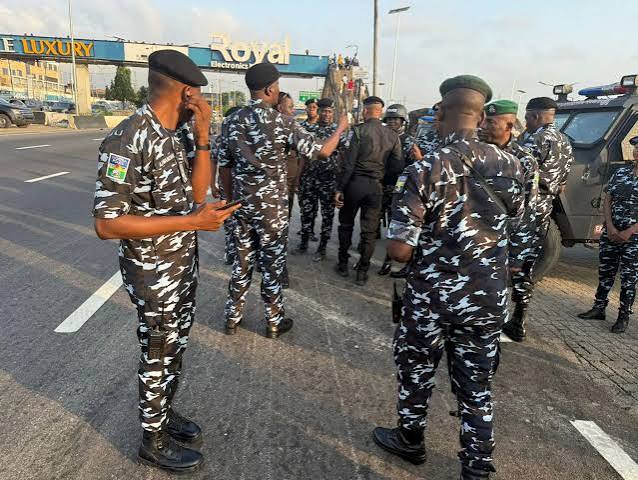
The National Economic Council (NEC) has approved an additional N130 billion for the rehabilitation of Nigeria’s police training institutions, bringing its total funding commitment to N230 billion. The approval was announced after the Council’s 162nd meeting, chaired by Vice President Kashim Shettima, according to a State House statement issued on Monday, November 23, 2026.

The additional funding is expected to accelerate rehabilitation work at 13 locations, upgrade training infrastructure and improve the capacity of police institutions to accommodate the planned recruitment of 50,000 personnel. The rehabilitation committee, chaired by Enugu State Governor Peter Mbah, informed the Council that work was ongoing across the 13 locations, with overall progress estimated at 30 per cent.
According to the State House, the increased funding reflects the government’s commitment to strengthening police training infrastructure ahead of proposed changes to Nigeria’s policing structure, including the establishment of state police. “With state police on the horizon, the National Economic Council (NEC) has committed an extra N130 billion to overhaul Nigeria’s police training institutions, bringing the total funding to N230 billion,” the statement said.
Beyond police infrastructure, the Council endorsed two proposed World Bank-supported development programmes valued at a combined $850 million. The first is the $350 million Accelerating Resilience and Infrastructure Strengthening in Nigeria (ARISE-Nigeria) programme, a six-year initiative designed to strengthen the country’s preparedness for disasters and climate-related risks.
The programme will support the establishment of emergency operations centres, improve early warning and weather monitoring systems, and strengthen disaster response financing. Its initial phase is expected to cover between five and 10 states.
The second is the $500 million State-Led Early Childhood Development Programme, which seeks to improve access to healthcare, nutrition, early learning and child protection across the 36 states and the Federal Capital Territory.
Under the initiative, integrated service hubs will connect primary healthcare centres with childcare and preschool services. The programme could also attract an additional $30 million grant from the Global Financing Facility.
The Council also called for stronger collaboration between the National Identity Management Commission (NIMC) and state governments to expand National Identification Number (NIN) registration and improve the integration of identity records.
It further approved a proposal by the Director-General of the National Pension Commission, Omolola Oloworaran, for the full implementation of the Contributory Pension Scheme across states. NEC urged state governments to establish clear timelines for implementing the scheme.
The Council’s deliberations come as Nigeria moves closer to establishing state police following the approval of the proposed constitutional amendment by all 36 State Houses of Assembly. The endorsement exceeds the constitutional requirement of at least 24 state assemblies under Section 9(2) of the 1999 Constitution.
The Senate passed the amendment bill on June 24, 2026, while the House of Representatives approved it on July 23. On November 16, the Clerk to the National Assembly, Kamoru Ogunlana, confirmed that all 36 state legislatures had endorsed the proposal.
Two days later, the Senate directed the Clerk to transmit the amendment to President Bola Tinubu for assent. It also called on the Federal Executive to forward the proposed National Policing Bill to the National Assembly to establish the legal and operational framework for state policing.
The constitutional amendment and the proposed National Policing Bill are critical steps towards decentralising police operations and defining the responsibilities, funding arrangements and operational structure of the proposed state police system.
The increased allocation for police training institutions is expected to support the infrastructure required to train additional personnel as the country considers a broader restructuring of its security architecture.