


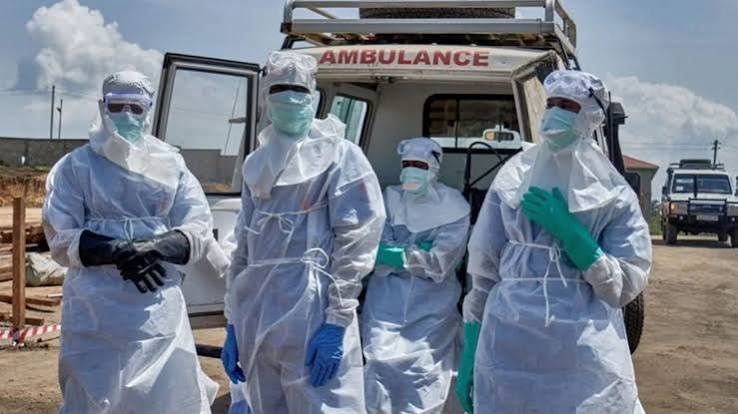
The Nigeria Centre for Disease Control and Prevention (NCDC) has identified two additional suspected Ebola cases and begun monitoring 53 primary contacts as health authorities intensify efforts to contain the country’s first confirmed imported case.

NCDC Director-General, Dr Jide Idris, disclosed this at a press briefing in Abuja on Sunday, October 25, 2026, as surveillance and contact-tracing operations continued following the confirmation of Ebola virus disease in a woman who recently travelled to Nigeria from Uganda.
The two suspected cases have not been confirmed as Ebola infections, with laboratory testing required to establish their status.
The development comes five days after the Federal Government announced the imported case on October 20, raising concerns about possible exposure among healthcare workers, household members and others who had contact with the patient.
According to Idris, health authorities have identified 53 primary contacts, comprising 44 people linked to the health facility where the patient received treatment and nine additional contacts.
The contacts include healthcare workers, the patient’s domestic staff and husband, personnel at another medical facility, and members of the team that collected samples from her.
“As of now, we have 53 primary contacts. These comprise 44 people from the health facility where the patient was treated and nine additional contacts,” Idris said.
He explained that three of the nine additional contacts were household members, including the patient’s driver, chef and husband. Three others had attended to her at Julius Berger Clinic before she was transferred to another facility, while the remaining three were members of the sample collection team.
The latest figure represents an increase from the 44 contacts initially identified when the Federal Government confirmed the imported infection.
Contact tracing is a critical part of Ebola response efforts, enabling health officials to identify people who may have been exposed, monitor them for symptoms and initiate appropriate action if signs of infection emerge.
Nigeria’s Coordinating Minister of Health and Social Welfare, Professor Muhammad Ali Pate, had earlier confirmed that the infected woman was receiving treatment in isolation.
Health authorities have since intensified surveillance and infection prevention measures to reduce the risk of further transmission.
The identification of additional suspected cases underscores the importance of rapid testing, timely reporting and close monitoring of people who may have been exposed. However, the two suspected cases should not be interpreted as confirmed infections until laboratory results are available.
Nigeria confirmed its first imported case of Bundibugyo Ebola virus disease on October 20, following laboratory testing of a woman who had recently travelled from Uganda.
According to the World Health Organisation (WHO), the patient developed symptoms on October 7, four days after arriving in Nigeria, and sought treatment at a private health facility in Abuja on October 11.
Subsequent genomic analysis indicated that the virus was closely related to the strain detected in Kenya’s index case. Nigerian authorities, however, said there was no confirmed direct epidemiological link between the two patients.
The case emerged amid a wider Bundibugyo Ebola outbreak in the Democratic Republic of the Congo, with infections also reported in Kenya.
The WHO has urged affected countries to strengthen disease surveillance, contact tracing and infection prevention measures to limit further transmission.
For Nigeria, the immediate priority remains establishing the status of the two suspected cases, monitoring identified contacts and ensuring that healthcare facilities maintain appropriate infection prevention protocols.
The effectiveness of these measures will be crucial in determining whether the imported infection can be contained without further spread.

