
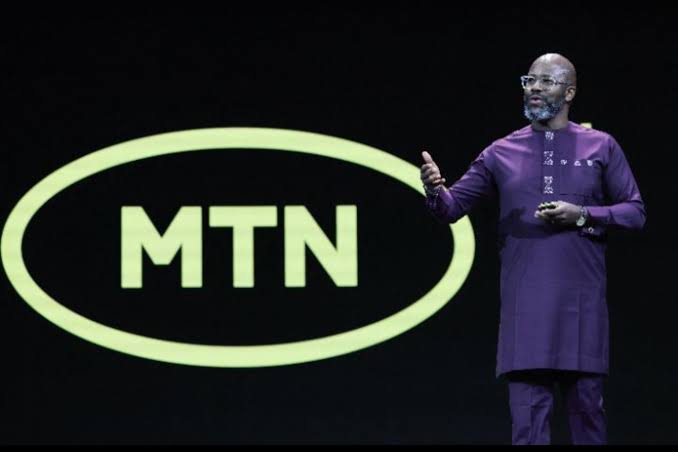
MTN Group, Africa’s largest mobile telecommunications operator, is stepping up its ambitions in financial services, seeking banking and financial services licences in Nigeria, Ghana and Rwanda to deepen its presence in the continent’s rapidly expanding fintech market. The company expects to secure the necessary regulatory approvals within the next one to two years, paving the way for its mobile money business to expand beyond payments into lending, savings and international money transfers.

Ralph Mupita, Group Chief Executive Officer, disclosed the plans in an interview with Semafor at its Next Three Billion summit in Johannesburg, South Africa. However, the proposed timeline remains MTN’s own projection, as regulatory authorities in the three countries are yet to approve the plans. It is also unclear whether the company has formally submitted licence applications in all three markets.
The expansion builds on the growing scale of MTN’s fintech operations. According to Mupita, the platform has approximately 70 million active users and processed transactions worth more than $500 billion in the nine months ended September 2026. He noted that basic mobile money services, including peer-to-peer transfers and cash-in and cash-out transactions, were becoming increasingly commonplace. This, he explained, was creating opportunities for the company to introduce more sophisticated financial products capable of generating higher revenue.
Nigeria, MTN’s largest market, is central to the company’s financial services ambitions. The telecommunications giant currently operates MoMo Payment Service Bank (PSB) under a licence issued by the Central Bank of Nigeria (CBN). Through the platform, it provides payment services and offers customers access to loans through partnerships with banks and other financial institutions.
However, MTN wants to move beyond this arrangement by obtaining a broader banking licence that would allow it to accept deposits and progressively provide loans from its own balance sheet. Mupita had indicated in August that the company was exploring this possibility, although he stressed that the transition would be gradual because direct lending would expose the business to additional financial risks.
Ghana is also an important part of the strategy. MTN Ghana was reportedly in discussions with the Bank of Ghana in March over a digital banking licence. Its MoMo platform already serves more than 19 million active users in the country, providing a substantial customer base for the proposed expansion.
Unlike its approach to some telecommunications investments, MTN intends to build its fintech business largely through organic growth rather than major acquisitions. Mupita said the company was not pursuing conventional mergers and acquisitions as its primary strategy for expanding its financial services operations.
The group’s telecommunications business, however, remains open to significant deals. In February, MTN proposed a $6.2 billion acquisition of IHS Towers. The company also revived discussions this month about a potential acquisition of Telkom, South Africa’s former fixed-line telecommunications monopoly.
MTN’s ambitions come amid intensifying competition among African telecommunications operators seeking to turn their extensive mobile money networks into broader financial services businesses. The mobile money revolution gained significant momentum following Safaricom’s launch of M-Pesa in Kenya in 2007. Since then, telecoms operators have increasingly expanded into payments, digital wallets, credit and other financial services.
Airtel Africa is another major competitor through its Airtel Money business, which was valued at approximately $7 billion when it listed in London last month. For MTN, securing additional licences would provide an opportunity to generate greater value from the extensive customer networks and payment infrastructure it has developed across its markets.
The strategy also aligns with the group’s Ambition 2030 growth agenda, which seeks to strengthen its position in digital and financial services. Ultimately, the success of the expansion will depend not only on MTN’s ability to leverage its existing customer base but also on regulatory approvals in Nigeria, Ghana and Rwanda.
With millions of Africans still underserved by traditional banking institutions, the proposed expansion could position MTN as a stronger competitor in the continent’s evolving digital financial services market.