
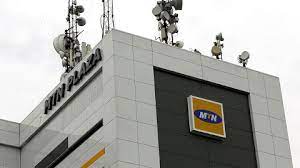
MTN Nigeria’s ₦620.5 billion capital programme for the first half of 2026 landed alongside a network that crossed 100 million subscribers this week, delivered an average of 14.8 gigabytes of data per user per month, and moved the median download speed on Nigerian networks from 16.5 megabits per second at the start of the year to 20 Mbps by mid-year.

Read together, the three figures describe an operator putting capital in ahead of demand and seeing the demand arrive to meet it.
The ₦620.5 billion figure, drawn from the operator’s H1 2026 financials, sits within a longer arc. Since January 2025, MTN Nigeria has deployed ₦1.62 trillion in network infrastructure across its roughly 66,000 sites. That spending has funded tower upgrades, spectrum deployment, fibre extension into new geographies, and the 5G rollout, which has now reached 730 sites across 27 states.
The improved median-speed figures come from independent network measurements published this quarter by the Nigerian Communications Commission and reflect the tail end of upgrades that have been underway since the start of 2024.
The capital deployment has occurred under macroeconomic conditions that would ordinarily constrain infrastructure spending. Diesel prices have roughly doubled since 2023. The naira has moved substantially over the same period, and in January, mobile data tariffs across Nigeria were adjusted upward by 50 per cent; the first review in nearly a decade.
Under those conditions, subscriber count climbed past 100 million, average data consumption per user rose 15.2 per cent year on year to 14.8 gigabytes per month, and Nigerian smartphone penetration reached 66.4 per cent and continued to climb. Consumers, taken in aggregate, are using more of the network under the new price and reaching more of it as coverage expands.
Underneath the subscriber and usage numbers sits an energy transition that will shape long-term affordability more than any single tariff decision. Diesel accounted for 58.11 per cent of MTN Nigeria’s energy mix in 2025, followed by independent power producer gas at 23.63 per cent, the national grid at 18.04 per cent, and renewables at 0.05 per cent.
The renewables figure is moving the fastest. In June, MTN Nigeria signed its first utility-scale solar deal, contracting 34 megawatts of solar capacity across eight of its largest sites through the First WATT partnership. As the renewable share of the mix grows and diesel dependence declines, the input-cost side of every gigabyte delivered improves structurally over time, independent of tariff decisions.
Resilience of service under operating stress is the other line the H1 numbers make visible. Chief Technology Officer Yahaya Ibrahim disclosed in August that the network handles around 450 vandalism incidents a day on its fibre and tower infrastructure, from cable cuts to tower attacks that force site rebuilds.
Set alongside that daily loss rate is a network that still delivered the median-speed improvement measured by the NCC this quarter, still crossed 100 million subscribers, and still extended 5G coverage into new states over the same period. The gap between operating stress and service outcomes is where the capital programme registers most directly for subscribers.
Data revenue for the half-year came to ₦1.699 trillion, up 38.4 per cent year-on-year, drawn from 55.7 million active data users. The revenue growth reflects two currents running in parallel: more Nigerians on the network and each of them using it more. The addressable base continues to expand as smartphone penetration climbs and 4G and 5G coverage reaches previously underserved corridors of the country. Both currents point in a direction that keeps the capital programme running at pace.
The picture the H1 numbers describe is of a network being built ahead of demand, with the demand consistently arriving to meet it. Through the second half of 2026 and into 2027, deeper 5G coverage will extend into states currently outside the 27-state footprint. The renewable share of the energy mix will continue to rise. Fibre will reach corridors across the country that have historically lacked broadband access.
For Nigerian subscribers, the expectation will be to feel each of those through faster speeds, wider coverage, and connectivity extending into previously offline geographies.