


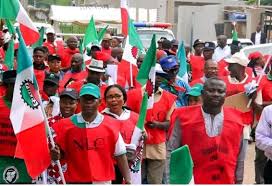
The Nigeria Labour Congress (NLC) Lagos State Council has called on the Lagos State Government to raise the state’s minimum wage from ₦85,000 to ₦225,000, citing rising inflation and worsening economic pressure on workers.

The demand was made by the council’s chairperson, Funmi Sessi, during the 2026 International Workers’ Day celebration at Mobolaji Johnson Arena.
According to the union, the current wage level has been overtaken by the rising cost of living, leaving workers struggling to meet basic needs such as food, housing, transportation, healthcare, and education.
“Given the current economic hardship and the high cost of living in Lagos, this amount is no longer sufficient,” the union said, urging the state government to review wages in the interest of worker welfare and industrial harmony.
The NLC noted that inflation, estimated at about 15.38 per cent, has significantly reduced purchasing power, eroding the value of the ₦85,000 wage approved in October 2024.
While the previous increase was welcomed, labour leaders said the pace of inflation has quickly wiped out its benefits, making a fresh adjustment necessary.
Workers, they said, are increasingly unable to cope with rising expenses despite full-time employment, pushing many into financial strain.
Beyond wages, the union also highlighted insecurity as a growing threat to productivity and worker safety, calling on both federal and state authorities to strengthen security across the country.
At the same time, the NLC commended the Lagos State Government for ongoing infrastructure projects, including rail development and road expansion, which are expected to improve mobility and economic activity.
Lagos State currently pays a minimum wage of ₦85,000, approved by Governor Babajide Sanwo-Olu in October 2024 and implemented the following month.
The state remains one of the higher-paying subnational governments in Nigeria. However, labour unions argue that persistent inflation and rising living costs have made the wage inadequate.
With similar pressures emerging across other states, the push for wage reviews is gaining momentum nationwide as workers seek relief from declining real incomes.

