The Lagos State Primary Health Care Board says about five per cent of the state’s health budget is allocated, directly and indirectly, to immunisation, as routine vaccine coverage climbs to 66 per cent.

Permanent Secretary Ibrahim Mustafa disclosed this in an interview to mark World Immunisation Week, noting that sustained investment in vaccine delivery and health systems is driving improved outcomes across the state.
He explained that immunisation efforts in Lagos State are funded through a combination of federal vaccine supply and state-backed support for logistics, cold chain infrastructure, and service delivery. The programme is also supported by partners including the National Primary Health Care Development Agency, World Health Organization, UNICEF, Gavi, the Vaccine Alliance, and AFENET.
“The state now commits significant resources to ensure that vaccines get to children,” Mustafa said.
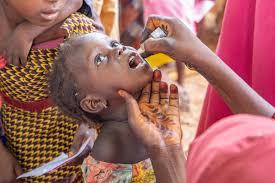
Despite the progress, he warned of persistent gaps. Lagos still has between 120,000 and 130,000 “zero-dose” children, those who have not received any routine vaccines, largely concentrated in hard-to-reach and informal communities such as Makoko, parts of Alimosho, and Ikorodu.
He attributed part of the challenge to rapid migration into Lagos, with many families arriving with children who have not begun or completed vaccination schedules.
On newer vaccines, Mustafa highlighted gains in the rollout of the Human Papillomavirus (HPV) vaccine, introduced about two years ago for girls aged nine to 14 to protect against cervical cancer. The programme initially faced resistance fueled by misinformation, with reports of hostility toward vaccinators in some areas, including parts of Ibeju-Lekki.
However, a coordinated public engagement campaign involving religious and community leaders, alongside media and social media advocacy, has significantly improved acceptance. According to him, more than 1.5 million girls have now received the HPV vaccine.
“We moved from strong hesitancy to growing demand. In many cases, people now request the vaccine themselves,” he said.
Nigeria continues to face a broader immunisation challenge, with an estimated 2.1 million zero-dose children recorded in 2023, one of the highest globally. Health experts say closing this gap is critical to strengthening herd immunity and preventing outbreaks of vaccine-preventable diseases.
Observed annually from April 24 to 30, World Immunisation Week highlights the life-saving impact of vaccines, which the World Health Organization estimates have prevented over 150 million deaths in the past 50 years.