


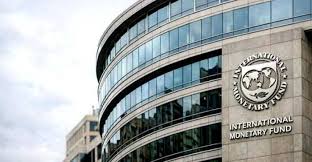
The International Monetary Fund (IMF) has urged Nigeria and other major African economies to intensify fiscal, monetary and governance reforms, warning that stronger economic institutions are essential to achieving sustainable and inclusive growth.

The Fund identified fiscal reform as a priority in seven of the eight largest African Union economies it assessed, with Nigeria requiring further improvements in tax policy, revenue administration, public financial management and the efficiency of government spending.
The IMF also highlighted the need to strengthen monetary policy frameworks and transmission mechanisms in Nigeria, Egypt and Ethiopia, while calling for governance improvements, including greater fiscal transparency, stronger public financial management and more effective anti-corruption measures.
According to the IMF, African economies can strengthen their growth prospects by improving domestic revenue mobilisation while ensuring that public funds are managed more efficiently and transparently.
“Adopting these recommendations can help support strong, sustainable, balanced, and inclusive growth by mobilising domestic revenue and strengthening macroeconomic institutions,” the Fund said.
For Nigeria, the recommendations come as the Federal Government continues to implement its sweeping tax reforms, which took effect in January 2026.
The reforms introduced a new framework through the Nigeria Tax Act, Nigeria Tax Administration Act, Nigeria Revenue Service (Establishment) Act and Joint Revenue Board (Establishment) Act.
The reforms are designed to simplify the tax system, eliminate duplicate taxes, harmonise tax administration, improve compliance and broaden the government’s revenue base, while reducing the burden on smaller businesses.
However, businesses continue to complain about multiple taxes and government levies.
The Central Bank of Nigeria’s July 2026 Business Expectations Survey found that 70.8 per cent of respondents identified high and multiple taxation as the biggest constraint to business operations, ahead of insecurity and high interest rates.
The IMF’s call for stronger monetary policy frameworks comes after several years of aggressive monetary tightening by the Central Bank of Nigeria.
Following the appointment of Olayemi Cardoso as CBN governor in 2023, the apex bank tightened monetary and liquidity conditions while implementing foreign exchange reforms aimed at addressing inflation, restoring market confidence and improving macroeconomic stability.
The Monetary Policy Rate, which stood at 18.75 per cent in 2023, was raised to 22.75 per cent in February 2024 and eventually reached 27.5 per cent by the end of that year.
The CBN also increased banks’ Cash Reserve Ratio from 32.5 per cent to 45 per cent in early 2024 and later to 50 per cent as part of efforts to absorb excess liquidity.
The tightening cycle has since given way to gradual monetary easing as inflationary pressures have moderated and economic conditions improved.
However, the high-interest-rate environment remains a source of concern.
Presidential aide Tope Fasua recently called for a rethink of the tight monetary policy stance, arguing that prolonged high interest rates could constrain economic growth without necessarily delivering the desired reduction in inflation.

