
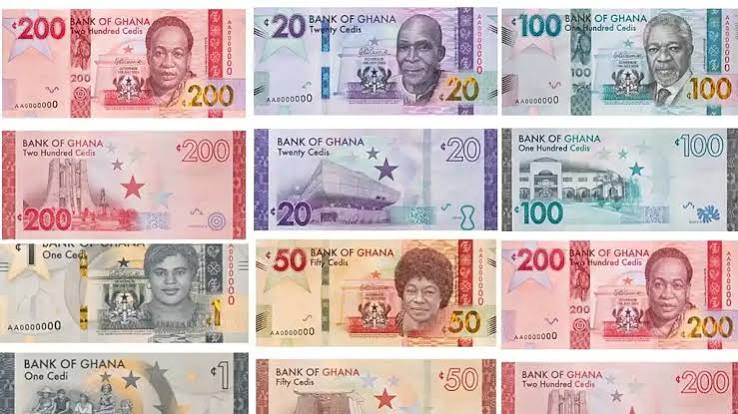
The Bank of Ghana (BoG) will introduce redesigned Ghana cedi banknotes into circulation from December 1, 2026, featuring enhanced security features, improved durability and designs celebrating the country’s cultural heritage.

The upgraded currency, known as the Ghana Cedi Heritage Series, was unveiled on Thursday, November 12, by the Governor of the Bank of Ghana, Dr Johnson Pandit Asiama, at the Bank Square in Accra. The new banknotes feature images of Ghana’s national heroes, historic landmarks, monuments and cultural symbols, including Adinkra symbols.
According to the central bank, the redesign is intended to strengthen currency security, make cash transactions more convenient and extend the lifespan of banknotes in circulation.
The Bank of Ghana said the Heritage Series incorporates improved security features designed to make counterfeiting more difficult and enable users to identify genuine banknotes more easily. The notes have also been redesigned in more portable sizes and manufactured with improved durability to withstand frequent handling and the country’s climatic conditions.
Governor Asiama said the decision to retain existing banknotes alongside the upgraded series would ensure a smooth transition without disrupting economic activities.
“The Heritage Series will be introduced into circulation from December 1, 2026, and will circulate alongside the existing series, which remains legal tender.
“This approach will allow the public and businesses to adjust smoothly to the Heritage banknotes without unnecessary disruption to economic activity,” he said.
This means Ghanaians will not be required to exchange their existing cedi notes before the December 1 introduction, as both the old and new series will remain legal tender.
Beyond the redesign, the Bank of Ghana is implementing additional measures to improve currency management, strengthen anti-counterfeiting efforts and expand access to cash services.
The central bank is working with relevant stakeholders to introduce a new Currency Act to replace the Currency Act, 1964 (Act 242).
The proposed legislation is expected to strengthen penalties for counterfeiting, clarify procedures for handling counterfeit notes and provide stronger legal protection against the mutilation, defacement and abuse of banknotes and coins.
Other initiatives announced by the governor include the development of an Enterprise Currency Operations Management Software (ECOMS) to improve coordination with commercial banks and the establishment of additional cash centres at the bank’s regional offices in Ho and Tamale.
The central bank will also introduce a Cedi App to educate users about the Heritage Series and assist people with visual impairments.
A nationwide public education campaign, to be conducted in major local languages, will further help Ghanaians identify genuine banknotes and understand how to handle them responsibly.
Asiama emphasised that physical cash remains important to Ghana’s monetary resilience despite the growing adoption of digital payments.
He noted that cash continues to provide an alternative during technical failures, cyber incidents and other disruptions affecting electronic payment systems.