


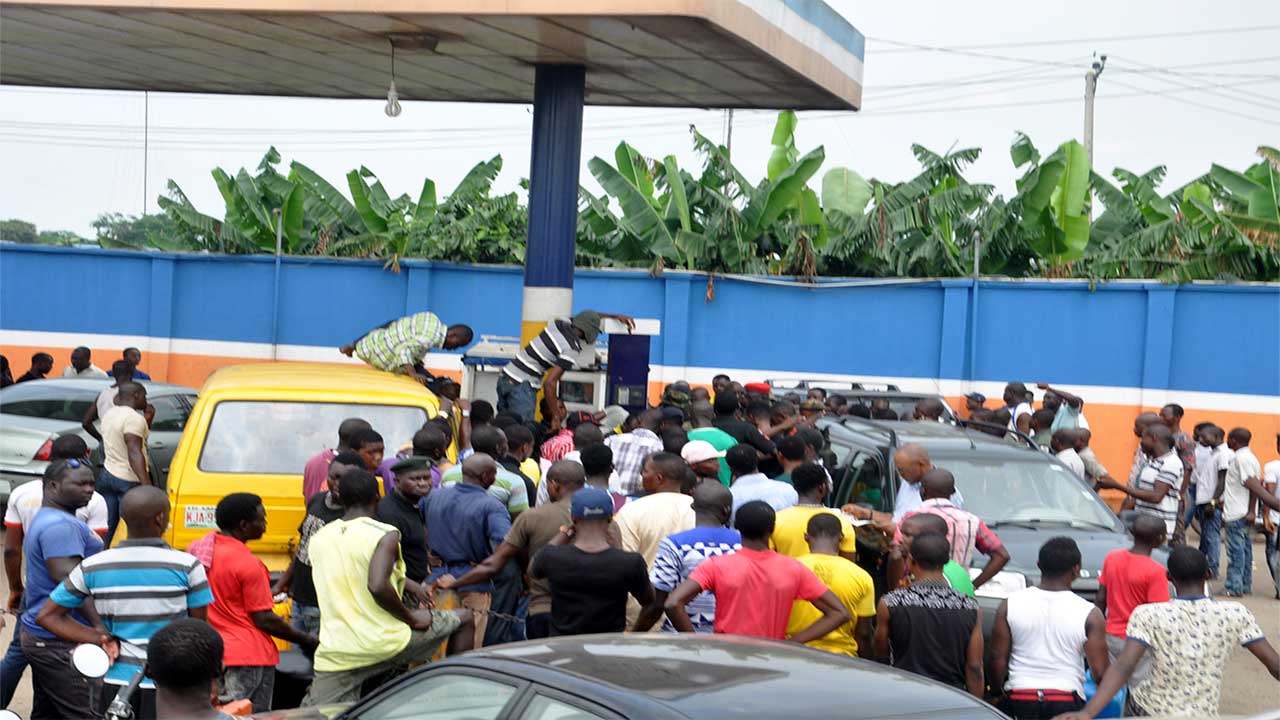
Long queues have begun forming at filling stations across Lagos as motorists rush to buy petrol from outlets still selling below ₦1,000 per litre following recent price increases.

A market survey on Saturday showed that many retail stations on both the Lagos mainland and island have raised pump prices above the ₦1,000 mark, triggering a rush for cheaper fuel.
Stations operated by MRS Oil along the Lagos–Ibadan Expressway recorded long queues as petrol sold for about ₦937 per litre, one of the lowest prices currently available.
Other marketers have adjusted prices upward. Eterna Plc sold petrol at about ₦1,040 per litre, while North West Petroleum and Fatgbems Petroleum set prices around ₦1,030 per litre. Retail outlets under the Mobil brand sold slightly lower at roughly ₦1,025 per litre.
Several stations were also not dispensing petrol as of early Saturday. An NNPC retail outlet at OPIC Estate was shut around 7 a.m., though the reason was unclear. However, other NNPC stations in Iwaya, Bariga and parts of Ikoyi were selling at about ₦1,050 per litre by midday.
The price surge follows an earlier adjustment by the Dangote Petroleum Refinery, which raised its ex-depot petrol price from ₦774 to ₦874 per litre, a move that has begun to ripple through retail markets.
Energy analysts warn that petrol prices could climb further if global crude oil prices remain high. International oil prices recently rose above $80 per barrel, partly driven by escalating geopolitical tensions involving the United States, Israel and Iran.
Paul Alaje, chief economist at SPM Professionals, said rising crude prices typically translate into higher costs for refined fuels.
“As crude oil goes up, the cost of petrol, diesel and aviation fuel will also rise. If the conflict continues, prices could reach ₦1,000 per litre or more by April,” he said.
Global oil markets have been volatile amid fears of supply disruptions around the Strait of Hormuz, a key shipping route for nearly 20 per cent of the world’s seaborne oil.
Analysts warn that prolonged disruptions could push energy prices higher globally, adding pressure on inflation and living costs in countries like Nigeria.

