By Opatola Victor
The recent escalation between the Presidency and the Catholic Bishops’ Conference of Nigeria deserves careful reflection. This is not because the bishops are beyond criticism, nor because the government should never respond to public commentary. In every constitutional democracy, robust disagreement is both inevitable and healthy. Governments are entitled to defend their policies, and religious leaders are equally entitled to express their views on matters affecting the nation.
However, statecraft often requires distinguishing between winning an argument and unprofitable self-sabotage.
From a statecraft and diplomatic perspective, the Presidency may have a greater interest in managing this relationship than in winning a public exchange. The Presidency may understandably believe it is engaging only a handful of Nigerian bishops. International diplomacy, however, presents a broader picture.
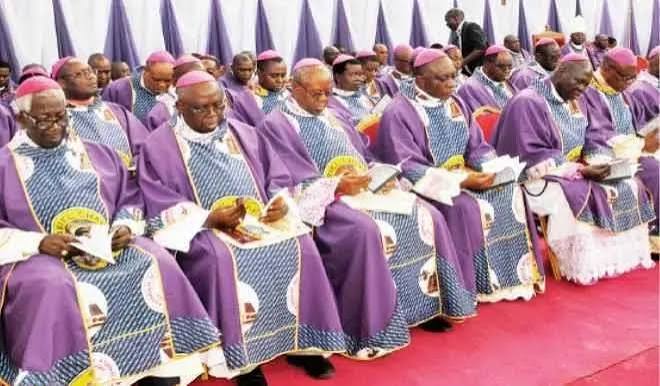
The Catholic bishops are high-representatives of one of the world’s oldest and most influential transnational institutions, an institution whose global reach extends far beyond the boundaries of Nigeria. For that reason alone, those close to the President should encourage a strategy of engagement rather than escalation. There are at least four reasons why this approach would better a better purpose.
First, the Catholic Church is not merely another religious organisation.
Unlike most religious bodies, the Catholic Church operates through a global hierarchy headed by the Pope. Nigerian bishops are part of that universal ecclesiastical structure.
Consequently, sustained public disagreements between governments and Catholic bishops rarely remain purely domestic affairs. Reports from the Nigerian episcopate naturally become part of the information available to the Holy See, shaping its understanding of developments within Nigeria. This does not mean every disagreement becomes a diplomatic dispute. Yet, it does truly mean that interactions with the Catholic hierarchy have an international dimension that circumspect governments should appreciate.
Second, the Catholic Church is one of the world’s most influential institutional sources of information on humanitarian and governance issues.
The Catholic Church maintains one of the most extensive institutional networks in the world. Through dioceses, parishes, schools, universities, hospitals, seminaries and humanitarian agencies, it possesses a remarkable presence within local communities.
As a result, statements issued by Catholic bishops are often considered by foreign governments, international organisations, legislatures and human rights bodies when assessing issues such as insecurity, elections, governance, humanitarian conditions and religious freedom. If the bishops consistently express concerns about democratic governance, insecurity or civic space, those views may become part of the wider body of material consulted in international assessments of Nigeria.
Third, Nigeria’s international image remains a strategic national asset.
Significant effort has been devoted to presenting Nigeria as a stable destination for investment and economic partnership. International confidence is shaped not only by economic reforms but also by perceptions of institutional stability and national cohesion. Public disagreements with one of the country’s most respected religious institutions may influence those perceptions, even if investment decisions are ultimately based on a broader range of economic considerations.
Fourth, there is also a domestic dimension that should not be ignored.
Beyond its international reach, the Catholic Church also represents a significant constituency within Nigeria itself. While estimates vary, Catholics account for approximately 10–13% of Nigeria’s population, translating to roughly 35–40 million faithful. This makes Nigeria one of the largest Catholic populations in the world and the second largest in Africa. The Church also operates one of the country’s largest networks of schools, hospitals, universities and humanitarian institutions. A relationship with an institution of this scale should be managed with strategic prudence rather than unnecessary confrontation.
Yet, none of these suggests that the Catholic Bishops’ Conference is immune from criticism or that the government should remain silent whenever it disagrees with the bishops. Far from it. Governments have every right to correct inaccuracies, defend their policies and explain their decisions.
The point is a different one. Not every disagreement should become an institutional contest. The mark of effective leadership is not winning every public argument but recognising which relationships deserve careful stewardship.
From a strategic perspective, the Presidency may have more to gain from managing this relationship than from winning a public exchange. Governments are judged not only by the arguments they make but also by the institutions they choose to confront and the manner in which they do so.
I believe President Bola appreciates the importance of diplomacy and long-term statecraft. For that reason, maintaining constructive engagement with the Catholic Bishops’ Conference would not be a sign of weakness. It would be a recognition that some institutions are best engaged through dialogue rather than prolonged public confrontation. Sometimes, the wisest political victory is not the loudest response but the quiet preservation of relationships that ultimately serve the national interest.
Opatola Victor is the National Coordinator Lawyers for Civil Liberties and can be reached via victor@lacivler.org