


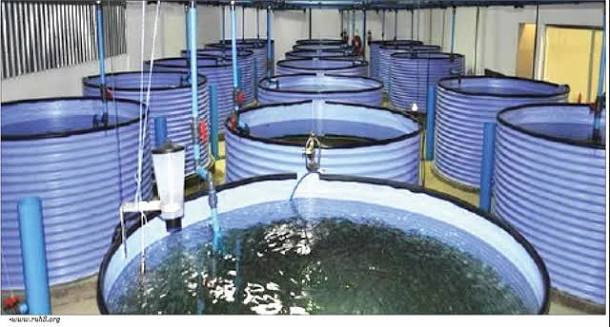
Fish farmers under the National Fish Association of Nigeria (NFAN) have called on the Federal Government to introduce policies that will support local production and reduce the rising cost of fish and other food commodities.

Dr Ladan Aliyu, NFAN President, said the sharp increase in foreign exchange costs had contributed significantly to the rising prices of imported fish and other food products in the Nigerian market.
Aliyu spoke at the inauguration of the executive committee of One Fish One Voice in Abuja, where he stressed the need for greater government support for domestic fish production.
He noted that despite the general increase in food prices, fish remained relatively cheaper than other sources of animal protein, particularly meat.
According to him, the high cost of livestock has further increased the importance of expanding affordable local fish production.
“Fish farming in the country is quite cheaper compared to the imported ones like Titus fish and others,” Aliyu said.
He added that the high cost of foreign exchange had made imported commodities increasingly expensive, stressing that Nigeria needed to strengthen domestic production to reduce dependence on imports.
“As an association, we intend to interact with marketers to see how prices can come down for consumers,” he said.
Aliyu disclosed that Nigeria requires about 300,000 metric tonnes of fish annually but currently produces less than a quarter of that volume, leaving a significant supply gap.
“About 300,000 metric tonnes of fish is needed in the country, but presently we are not producing even a quarter. There are lots of gaps to cover and a lot is needed to bring down the price of this commodity,” he said.
The NFAN president appealed to the government to work closely with fish farmers and other stakeholders to close the production gap and improve food affordability.
“We are appealing to the government to work with us to achieve this feat,” he said.
Adewale Adewu, Deputy President of NFAN, said the rising cost of fish was part of a broader global trend but stressed that targeted government policies could help ease the pressure on consumers and producers.
He said the industry needed stronger support to create value across the entire fish-farming value chain, from production to marketing.
According to him, One Fish One Voice was established to promote collaboration among fish farmers, facilitate knowledge and idea sharing, and develop practical solutions to challenges confronting the sector.
He said the initiative would also seek to build a community where fish farmers from different backgrounds, regions and operating environments could access support and share experiences.
Adewu added that the platform would work to protect farmers from scammers, hackers and other fraudulent actors while providing assistance, including financial and non-financial support, where possible.
The stakeholders said stronger collaboration between government and fish farmers would be critical to expanding domestic production, reducing import dependence and making fish more affordable for Nigerian consumers.

