


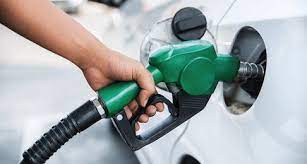
The Federal Government has directed petroleum marketers to immediately reduce the pump prices of Premium Motor Spirit (PMS), popularly known as petrol, and other petroleum products to reflect the recent decline in global crude oil prices.

The directive was issued on Monday by Senator Heineken Lokpobiri, the Minister of State for Petroleum Resources (Oil), during the 2026 Nigerian Midstream and Downstream Petroleum Regulatory Authority (NMDPRA) General Counsel and Legal Advisers Forum in Abuja.
The forum was themed “Beyond Compliance: Certainty and Investment Confidence in Nigeria’s Petroleum Sector.”
Lokpobiri said the easing of geopolitical tensions involving Iran and the United States has contributed to a decline in global oil prices, making it necessary for domestic fuel prices to adjust accordingly.
He expressed concern that, despite the drop in international crude prices, many marketers have yet to pass the benefits on to Nigerian consumers.
“We expect petroleum product prices to respond to changing market realities. Marketers should not take advantage of the situation to make excessive profits at the expense of Nigerians,” he said.
The minister noted that while Nigeria’s deregulated downstream petroleum sector allows market forces to determine prices, regulators have a responsibility to ensure consumers are protected from unfair pricing practices in line with the Petroleum Industry Act (PIA) 2021.
According to him, regulatory effectiveness should no longer be measured solely by whether operators comply with the law but also by whether the regulatory environment is transparent, predictable, and capable of attracting long-term investment.
“For too long, the dominant question has been whether operators are complying. Compliance remains important, but an even more critical question is whether regulators are providing the certainty investors need to commit long-term capital,” Lokpobiri said.
He also warned against sharp practices in fuel dispensing, stressing that consumers must receive the exact quantity they pay for.
“When someone pays for 10 litres of PMS, they should receive exactly 10 litres, nothing less,” he said.
Lokpobiri credited the Federal Government’s decision to fully deregulate the downstream petroleum sector with attracting fresh investment into Nigeria’s refining industry, particularly the operationalisation of the Dangote Refinery and several modular refinery projects.
He said the reforms have largely eliminated the era of persistent fuel scarcity, with petroleum products remaining available nationwide despite recent supply disruptions triggered by the Middle East conflict.
The minister also urged legal advisers and regulatory professionals to play a more strategic role in strengthening Nigeria’s investment climate by identifying policies or regulations that create uncertainty for investors.
According to him, attracting more investment into the petroleum industry will depend on policy consistency, transparent regulation, efficient dispute resolution mechanisms, and stronger collaboration among government agencies, regulators, industry operators, and legal practitioners.
The government’s directive comes amid growing concerns over the slow pace of reductions in petrol prices despite falling international crude oil prices.
Last week, the Federal Competition and Consumer Protection Commission (FCCPC) warned refiners, depot owners, marketers, and retailers against maintaining artificially high prices. The Commission said businesses found exploiting consumers through unjustifiable pricing could face regulatory sanctions.
The FCCPC added that its market surveillance showed recent reductions in depot and retail fuel prices have not been commensurate with the sharp decline recorded in global crude oil prices.
