


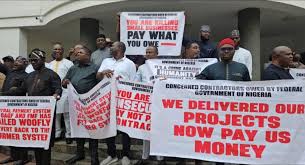
The Federal Government has confirmed the payment of ₦152 billion to contractors for verified projects, even as indigenous contractors resumed protests in Abuja over alleged unpaid debts running into trillions of naira.

The confirmation was contained in a statement issued on Thursday by the Federal Ministry of Finance and shared by presidential aide Dada Olusegun on X (formerly Twitter).
According to the ministry, the payments followed due verification processes in line with existing financial regulations, stressing that funds are only released after thorough checks to ensure accountability and protect public resources.
“This is to confirm that the FMF has paid ₦152bn to contractors for verified contracts,” the statement said, adding that while delays have caused financial strain for contractors, adherence to due process remains non-negotiable. The ministry also called for continued dialogue to resolve outstanding disputes.
The clarification comes amid renewed protests by indigenous contractors, who on Monday took to the streets of Abuja demanding payment of an estimated ₦4 trillion allegedly owed for completed 2024 capital projects. The protesters claim the projects were fully executed, inspected, and certified by relevant government agencies.
The latest demonstration follows a similar protest in December 2025. In August 2025, the Minister of Finance and Coordinating Minister of the Economy, Wale Edun, disclosed that over ₦2 trillion had been paid for 2024 capital expenditure obligations. Contractors, however, insist that significant balances—particularly affecting local firms—remain unpaid.
In response, the Federal Government has made fresh budgetary provisions to address contractor debts. The 2026 Appropriation Bill earmarks ₦100 billion specifically for settling verified obligations to indigenous contractors.
While contractor groups have welcomed the allocation, they argue that the amount falls far short of liabilities they estimate to be in the trillions of naira, warning that continued payment delays could worsen project abandonment, job losses, and liquidity pressures across the construction and infrastructure sectors.

