


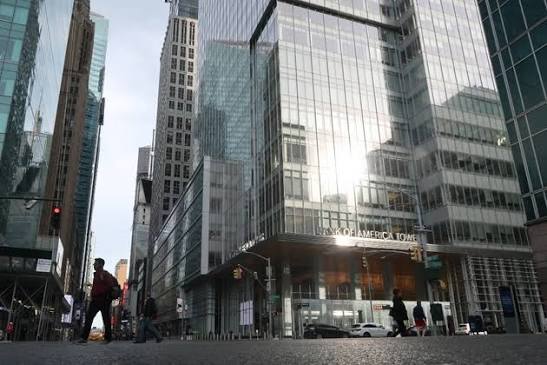
Office buildings that once housed thousands of workers are increasingly being converted into apartments as cities respond to falling demand for commercial space and growing pressure to provide more housing. The trend, gathering pace in cities including Paris, New York, Washington DC and London, reflects a shift in urban development following the COVID-19 pandemic and the rise of remote and hybrid working.

In Paris, the La Défense business district is among the latest areas embracing the change. The district, known for its concentration of modern skyscrapers, plans to convert up to a fifth of its office buildings into residential properties. One of the first projects is Le Diamant, a nine-storey office building where about 1,800 people currently work. Its owner, French real estate company Groupama Immobilier, plans to transform the building into apartments.
Roland Cubin, the company’s deputy chief executive, says the conversion will require significant redesign. Spaces currently occupied by offices and conference rooms will be reconfigured to accommodate kitchens, bathrooms and living areas.
However, converting office towers into homes presents technical challenges. Large office floors often have central areas without access to natural light, making them unsuitable for bedrooms and other living spaces. Developers must also address plumbing requirements, ceiling heights and other residential standards.
Despite these difficulties, the economics of office-to-residential conversion are becoming more attractive as demand for office space declines.
Pierre-Yves Guice, chief executive of Paris La Défense, said the district’s office vacancy rate had risen to between 14 and 15 per cent, above historical levels. He explained that the conversion programme is also part of a broader effort to make La Défense a more liveable urban centre rather than a district where people only come to work.
Ludovic Delaisse, chief executive of Colliers’ French business, said demand for office space in Paris had fallen by almost a third over the past five to six years.
While offices will remain important, he argued that business districts must offer more amenities, including restaurants, bars, cinemas and gyms, to attract and retain workers and businesses.
The trend is also gaining ground in the United States, where tax incentives and relaxed planning rules are encouraging developers to repurpose vacant office buildings.
In Washington DC, the Geneva building is among the major conversion projects. The city’s deputy mayor for planning and economic development, Nina Albert, said the administration had set a target of bringing 15,000 additional residents into the downtown area by 2028 and was on track to achieve it.
She said most of the new housing would come from converting existing office buildings rather than demolishing them.
Developers have also found ways to address the challenge of limited natural light in deep office buildings, including creating central atriums that allow daylight to reach interior spaces.
Albert said hundreds of millions of dollars in private investment had flowed into the conversion market. Tax incentives and simplified building approval processes have helped make projects more viable.
New York City is experiencing a similar shift. A report published last year showed that 8,310 apartments were in the conversion pipeline in the city, while Washington DC had 6,533. Los Angeles and Chicago followed with 4,322 and 3,606 apartments respectively.
London is also seeing increased activity. A report by property consultancy Knight Frank found that office-to-residential conversion projects in the capital were 60 per cent above pre-pandemic levels.

