


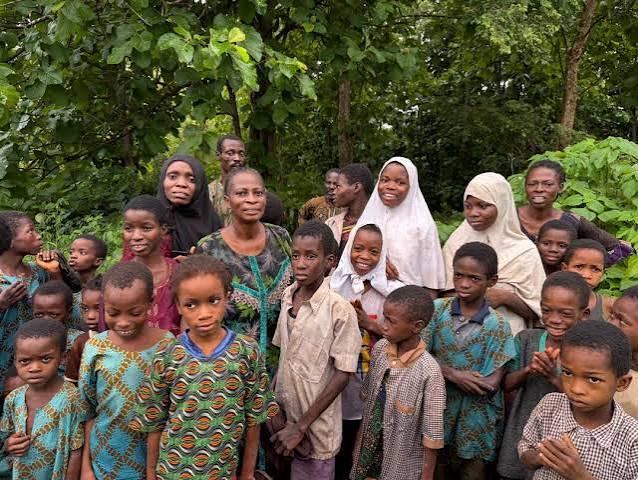
The images of relieved parents embracing their children after 56 harrowing days in captivity were among the most emotional scenes Nigeria has witnessed this year. The rescue of 46 abducted pupils and teachers from Oriire Local Government Area of Oyo State brought an end to nearly two months of fear, uncertainty and national anxiety. For the victims, their families and the communities of Ahoro-Esiele and Yawota, the return of their loved ones was nothing short of a miracle.

There is every reason to celebrate the successful operation by security agencies. Bringing home dozens of hostages alive after such a prolonged period is no small achievement. It reflects determination, coordination and intelligence gathering involving the military, the Department of State Services (DSS), police operatives and local hunters. Reports that several suspected kidnappers were arrested while others were neutralised underscore the risks taken by security personnel to secure the victims’ freedom.
Yet, amid the jubilation, Nigerians must resist the temptation to view the rescue as the end of the story. If anything, it should mark the beginning of a deeper national conversation about the growing insecurity that continues to threaten schools, rural communities and the country’s future.
The first question that naturally arises is why it took 56 days to rescue the victims.
For nearly two months, 39 schoolchildren, seven teachers and their principal remained in the custody of armed criminals. During that period, one teacher, Michael Oyedokun, was reportedly killed by the kidnappers, a grim reminder of the brutality that has come to define Nigeria’s kidnapping epidemic. Families lived in agony, unsure whether their loved ones would ever return home. The children endured unimaginable psychological trauma, while schools and communities remained gripped by fear.
The prolonged captivity highlights both the strengths and weaknesses of Nigeria’s security architecture. On one hand, the eventual rescue demonstrates that security agencies possess the capacity to conduct sophisticated intelligence-led operations. On the other, the length of the ordeal raises concerns about intelligence gathering, rapid response capabilities and the ability to deny criminal groups safe operating spaces.
Perhaps even more troubling is what the incident says about the changing geography of insecurity in Nigeria.
For years, school kidnappings were largely associated with the North-West, where attacks on schools in states such as Kaduna, Zamfara and Niger drew international condemnation. The Oyo incident demonstrates that this threat has spread well beyond its traditional hotspots. Criminal networks appear increasingly willing to exploit security gaps wherever they exist, making no region immune.
This development should concern policymakers. It suggests that kidnapping has evolved from a regional security challenge into a nationwide criminal enterprise driven by profit rather than ideology. As criminal gangs migrate into new territories, security planning must also evolve. Intelligence sharing, surveillance of forests and improved policing in rural communities can no longer be treated as regional priorities; they have become national imperatives.
The attack also exposes the vulnerability of Nigeria’s education system.
Parents across the country are increasingly asking a painful question: Is it safe to send children to school?
Every attack on an educational institution chips away at public confidence and threatens years of progress in expanding access to education. Rural communities are particularly vulnerable because many schools lack perimeter fencing, security personnel, communication infrastructure and emergency response mechanisms.
Nigeria already has one of the world’s largest populations of out-of-school children. When parents begin withdrawing children from classrooms out of fear of abduction, the consequences extend far beyond individual families. They undermine national development, deepen poverty and limit opportunities for future generations.
Beyond the statistics lies another crisis that often receives little attention: trauma.
The rescued pupils may have regained their freedom, but their emotional recovery is only beginning. Weeks spent in captivity can leave lasting psychological scars, particularly for children. Anxiety, depression, nightmares and fear of returning to school are common consequences of prolonged hostage situations. Teachers who survived the ordeal may equally struggle to resume normal classroom activities, while the family of the slain teacher faces a loss that no rescue operation can undo.
This reality underscores the need for comprehensive post-rescue support. Counselling, medical care, educational assistance and community rehabilitation should be treated as essential components of any rescue effort. Success should not be measured solely by bringing victims home alive but also by helping them rebuild their lives.
The role played by local hunters during the rescue also deserves attention.
Across many parts of Nigeria, community-based security groups possess intimate knowledge of local terrain that formal security agencies often lack. Their involvement in this operation reinforces the value of structured collaboration between conventional security institutions and trusted local actors. Such partnerships, however, must operate within clear legal frameworks that ensure accountability and respect for human rights.
Equally important is what happens after the rescue.
Authorities have confirmed the arrest of several suspected kidnappers. Their prosecution will test the effectiveness of Nigeria’s criminal justice system. Too often, kidnapping suspects disappear into lengthy investigations and delayed court processes that fail to deliver justice or deter future crimes. Swift and transparent prosecution, backed by credible evidence, would send a stronger message that kidnapping carries severe consequences.
Political leaders have understandably welcomed the rescue and praised the security agencies involved. Such recognition is appropriate. However, citizens are likely to judge governments less by congratulatory statements than by their ability to prevent future attacks. The real measure of success is not how efficiently hostages are rescued after weeks in captivity but whether such kidnappings occur at all.
The Oyo rescue is therefore both a victory and a warning.
It is a victory because 46 lives were saved and reunited with their families. It is a warning because it reminds Nigerians that criminal groups remain capable of attacking schools, holding children captive for weeks and inflicting profound suffering before security forces can intervene.
The challenge before government is clear. Nigeria must move from a strategy centred on rescue to one focused on prevention. That means strengthening intelligence networks, securing schools, improving rural policing, deploying technology for surveillance, protecting forest corridors and ensuring that kidnappers face swift justice.
The country should celebrate the safe return of the Oyo pupils and teachers. But it should also recognise that the greatest achievement will come when children can attend school without fear, parents no longer worry about whether their sons and daughters will return home, and rescue operations of this nature become unnecessary because the conditions that enable such crimes have been effectively dismantled. Only then can Nigeria truly claim victory over the growing menace of school kidnappings.

