
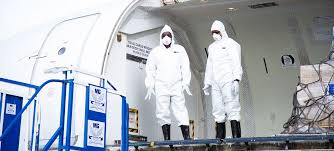
The Nigeria Centre for Disease Control and Prevention (NCDC) says 34 of the 62 people identified as contacts of Nigeria’s imported Bundibugyo Ebola case have completed their mandatory 21-day monitoring period, while 28 others remain under surveillance.

The agency also confirmed that Nigeria has recorded no new Ebola case, 21 days after detecting the imported infection linked to Uganda.
Dr Jide Idris, NCDC Director-General, disclosed this in a national health security update issued on Tuesday, November 10, 2026, noting that the agency was sustaining contact tracing, laboratory testing and surveillance to prevent further transmission.
He explained that being identified as an Ebola contact does not mean an individual has contracted the virus, stressing that the monitoring process is designed to detect symptoms early and ensure prompt medical intervention where necessary.
According to Idris, the NCDC is working with the Federal Ministry of Health and Social Welfare, the Federal Capital Territory Administration, state authorities and development partners to strengthen the country’s response.
The coordinated efforts include contact tracing, investigation of suspected cases, laboratory testing, infection prevention, safe clinical care and surveillance at points of entry.
Idris urged healthcare workers in public and private facilities to remain vigilant, obtain patients’ travel and exposure histories, and promptly report suspected Ebola cases to public health authorities.
He also advised anyone who develops symptoms after possible exposure to avoid contact with others and call the NCDC toll-free line, 6232, for guidance before visiting a health facility.
Beyond the Ebola response, the NCDC disclosed that dengue fever had been confirmed in Sokoto and Zamfara States, while Chikungunya infections were confirmed in Sokoto.
The agency has intensified surveillance and response activities in the affected areas, deploying National Rapid Response Teams, including entomologists from the National Arbovirus Research Centre in Enugu.
The teams are supporting case identification, laboratory investigations, clinical preparedness, community engagement and mosquito-control activities.
Idris cautioned Nigerians against assuming that every fever is malaria, noting that dengue and Chikungunya can produce similar symptoms, including fever, headaches, body pains and joint pains.
He urged people experiencing persistent fever, skin rashes, vomiting or severe joint pains to seek medical attention promptly.
He particularly warned that dengue could become life-threatening if its warning signs were ignored and appropriate treatment delayed.
To reduce exposure to mosquito-borne infections, the NCDC advised households to eliminate stagnant water, cover water storage containers, clear discarded tyres and other potential mosquito breeding sites, and use appropriate protection against mosquito bites.
The agency also noted that some disease-carrying mosquitoes bite during the daytime, making preventive measures important beyond sleeping hours.