


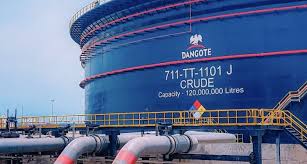
Dangote Petroleum Refinery has exported 456,000 tonnes of refined petroleum products to African markets, marking a major step in its expansion beyond Nigeria.

According to sources familiar with the development, the shipments were delivered through 12 cargoes lifted by international traders and sent to countries including Côte d’Ivoire, Cameroon, Tanzania, Ghana, and Togo. The exports consist mainly of Premium Motor Spirit (PMS), commonly known as petrol.
The milestone comes shortly after the refinery reached its full production capacity of 650,000 barrels per day in February, positioning it as a significant supplier in the regional energy market.
Sources said the products were sold on a Free on Board (FOB) basis to international traders, who handled distribution to the destination countries. The exports signal the refinery’s growing ability to meet domestic demand while also supplying neighbouring markets.
The development is taking place against the backdrop of heightened global energy tensions, with disruptions linked to conflicts involving Iran, the United States, and Israel increasing demand for alternative fuel sources, particularly in Africa.
Data from energy consultancy CITAC shows that Sub-Saharan Africa consumed about 114 million metric tonnes of petroleum products in 2024, with most countries relying heavily on imports due to limited refining capacity. A significant portion of these imports, especially in East and Southern Africa, traditionally comes from the Middle East.
Industry observers say the Dangote refinery’s rising output could help reduce the continent’s dependence on fuel imports from outside Africa. The facility has also begun supplying Euro 5 standard gasoline and diesel, offering cleaner and higher-quality fuel options.
In recent weeks, there has been a surge in enquiries from African countries seeking fuel supplies from the refinery, as governments move to secure energy sources amid global supply uncertainties. Some countries are also exploring longer-term supply agreements with Nigeria.
While about 75% of the refinery’s output is currently dedicated to meeting Nigeria’s domestic needs, the remaining capacity is being channelled into exports, strengthening the country’s position in regional energy trade.
Analysts say the refinery’s expansion could reshape Africa’s downstream oil sector by improving energy security, reducing logistics costs, and easing supply constraints across West, East, and Central Africa.
The development also marks a shift in Nigeria’s role in the global energy market, from a major importer of refined fuel to an emerging exporter capable of supplying the continent.

